




The Acacia Tortilis: Economic, Social, and Environmental Value
11 May, 2025
PortSudan(Sudanow)- The Acacia tortilis tree, also known as the "Siyal" tree, is a symbol of resilience, as described by the renowned Sudanese writer Tayeb Salih in his novel "Season of Migration to the North". In a time that requires standing strong against adversaries and the whims of time, it is crucial to protect and promote the cultivation of this tree, as well as intensify awareness campaigns to preserve its ecological and economic role in Sudan.
According to agricultural engineer Rehab Al-Zaki, the Acacia tortilis tree is one of the most widespread and important tree species in Sudan and sub-Saharan Africa. It plays a vital role in combating desertification, supporting rural economies, and conserving natural resources due to its ability to withstand harsh climatic conditions. Additionally, it serves as a vital source of food, fodder, energy, and non-timber products that support livelihoods in rural communities. Besides its environmental significance in combating desertification and land reclamation.
The Acacia tortilis tree is considered one of the most adaptable species to dry environments, growing in deserts and arid regions with annual rainfall of less than 40 mm. It is a pioneer tree in land rehabilitation projects in Sudan, used in green belt programs to combat climate change and improve soil fertility by promoting the growth of other plants beneath it. Additionally, it provides a vital habitat for various wildlife, including birds, reptiles, and insects, contributing to the conservation of biodiversity in arid regions. As a vital source of shade, it mitigates the climate by reducing temperatures in desert regions, providing natural windbreaks and environmental moderation, which helps improve the local climate.
Regarding the economic importance of the Acacia tortilis tree in Sudan, agricultural engineer Rehab Al-Zaki states that these trees significantly contribute to the production of gum arabic and support the rural economy by producing a reddish-colored gum. Although it is of lower quality than hashab gum, it is used in some food and medical industries. The leaves and branches of the Acacia tortilis tree are a primary source of fodder, providing high-value nutrition for livestock (camels, goats, and cattle) during periods of drought when other food sources are scarce. This contributes to increased productivity of livestock by improving animal health and enhancing milk production efficiency in cattle, thereby supporting food security in rural communities.
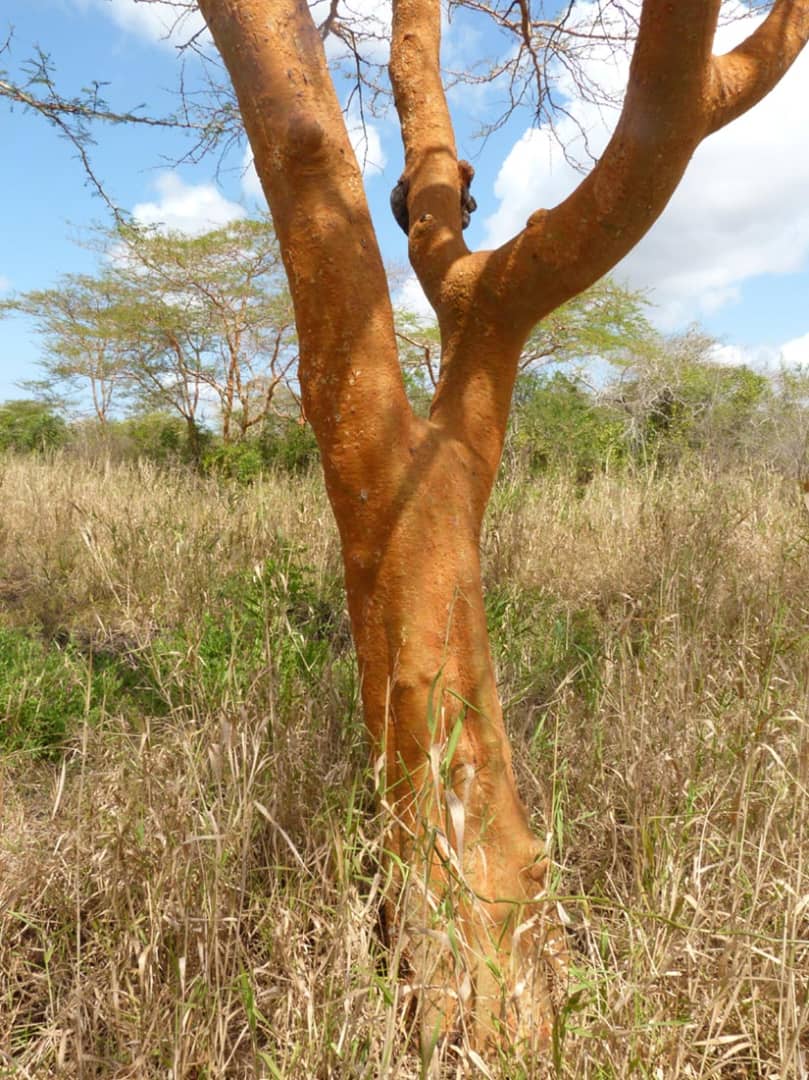
Its strong and durable wood is used to produce high-quality charcoal, which is a primary source of energy, especially in rural areas lacking electricity. Additionally, its wood is used in building houses and fences and crafting traditional tools, enhancing its economic value.
It is also considered one of the most important sources of nectar for honey bees, as its flowers produce a rich nectar used in high-quality honey production, contributing to the support of the beekeeping sector and enhancing the income of small-scale producers.
The Acacia tortilis tree holds significant social importance, featuring in various traditional remedies and folk medicine for ailments such as digestive disorders, skin infections, and respiratory diseases. A decoction of the tree's bark is used as a wound antiseptic, while the gum is utilized in some traditional communities as a dietary supplement and health enhancer. Additionally, the tree has aesthetic value, traditionally used by women as a form of adornment known as "dukhan," which emits a distinctive fragrance when its wood is burned, used for perfuming spaces. It is also valued for its role in treating joint moisture, lowering blood sugar levels, and managing hypertension.
In some regions, the Acacia tortilis tree is celebrated during traditional festivals and occasions as a symbol of strength, resilience, and connection to the land, reflecting a cultural heritage.
In conclusion, engineer Rehab notes that the Acacia tortilis tree faces challenges to its survival, primarily environmental and human-induced threats that jeopardize its sustainability in Sudan. These include climate change, which impacts its natural regeneration through drought and rising temperatures. The tree is also vulnerable to destruction due to agricultural expansion, overgrazing, and indiscriminate cutting.
Post your comments
Photo of the Week

Khartoum (Sudanaow Magazine) - In the heart of the capital Khartoum, specifically in the upscale Al-Taif neighbourhood, a young Sudanese man succeeded in turning his childhood dream and hobby of raising birds into a unique environmental and tourism project in Sudan and the region. It is the Marshal Nature Reserve, which had become a destination for visitors, embassies, and intern...
More-

16 November, 2026
Tales of Return Civil Registry Recovers Its Entire Database Despite War Destruction
A significant step forward:Reviewing civil records and refining National Identification Numbers to safeguard national identity. Major General Iqbal Mansour: Data recovery has enabled the continuation of services and the resumption of registration. Lieutenant General Dr. Jalal Tawar: Hails the thwarting of militia plans. Sudan’s Civil Registry has fully recovered its database despite the damage inflicted on its a...

Contact Us

Address: Sudan News Agency (SUNA) Building, Jamhoria Street, Khartoum - Sudan
Mobile:+249 909220011 / +249 912307547