


The US Election Earthquake: Trump, Congress, and the Future of American Influence
08 November, 2026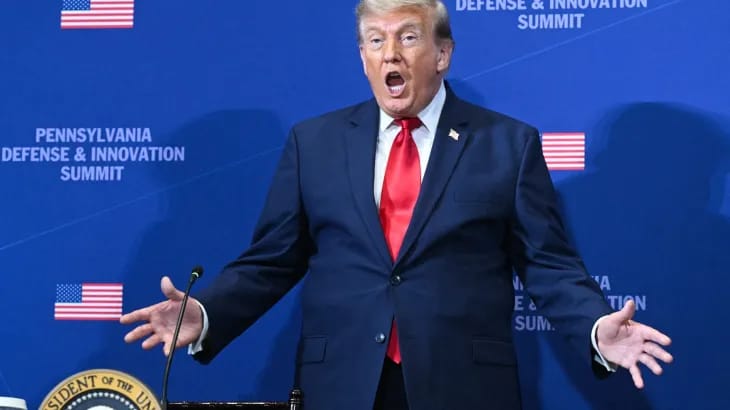
Khartoum – (Sudanow)
From the Ballot Box to the Reshaping of American Power, the International Order, and the Future of the Republican Party
The results of the November 3, 2026, US midterm elections were far more than a passing electoral setback for the Republican Party or a conventional shift in the balance of power within Congress. They carried deeper political and strategic implications, placing the administration of President Donald Trump before an unprecedented test in his second term and opening the door to a new phase of institutional confrontation in American politics, with implications extending well beyond domestic affairs into the international arena.
The Democratic Party succeeded in securing control of both the House of Representatives and the Senate, marking a remarkable electoral shift after Republicans had previously held majorities in both chambers. In practical terms, this means that the United States is entering a period of institutional division in the exercise of power during the final two years of Trump's presidency.
Preliminary announced results indicate Democratic majorities in both chambers, accompanied by gains in states that had long been considered traditional Republican strongholds, including Texas, Kansas, South Carolina, and North Carolina. The significance of these developments lies not merely in the number of seats won, but also in the changing electoral geography and the social constituencies that have redirected their political preferences.
First: Why Did the Political Shift Occur? From the Cost-of-Living Crisis to a Crisis of Political Confidence
These results cannot be understood without examining the interplay of economic, political, and strategic factors that accumulated over recent months and generated growing public dissatisfaction with the Republican administration. Although signs of opposition emerged early, the administration chose to press ahead, ultimately facing this electoral outcome.
The foremost factor was the rising cost of living, inflation, and the prices of fuel and food, all of which directly affect the everyday lives of American citizens. The challenge confronting the Trump administration was not necessarily the absence of economic slogans or promises to restore American strength, but rather the widening gap between those promises and what citizens actually experienced in their incomes, purchasing power, and living standards.
Tariffs and protectionist trade policies added further economic pressure. The trade confrontation with economic partners and competitors was no longer simply a negotiating instrument intended to secure better terms for American trade. Its consequences for domestic prices and markets had become an integral part of the electoral debate itself.
The second factor was the US war with Iran, whose repercussions extended beyond military and strategic calculations to affect the American economy, energy markets, and relations with allies. Rising energy costs, disrupted supplies, and fears of an expanding confrontation without a decisive victory prompted some voters to question the wisdom of continued military engagement and its costs, particularly at a time when domestic economic priorities were taking precedence in public concerns.
Surveys conducted by the Chicago Council on Global Affairs indicate that 86% of Americans believed the war with Iran had negatively affected the cost of living, while 72% considered that it had damaged America's international relations and global reputation. These indicators demonstrate how foreign policy has moved from the sphere of elite debate into the heart of ordinary American voters' electoral calculations.
A third factor concerns the crisis of confidence in governance, including controversies surrounding transparency, conflicts of interest, and the administration's approach to public institutions, alongside intense political polarization, healthcare policies, immigration, and forced deportations.
The results demonstrated that mobilizing rhetoric alone was no longer sufficient to retain the electoral coalition that had granted Trump and the Republican Party a broad mandate in the 2024 elections.
Herein lies the paradox: a party that built much of its political appeal around the slogan of restoring America's greatness and strength found itself facing voters who were demanding something more immediate: the restoration of their ability to afford everyday life, the assurance of stability, and tangible results rather than hollow slogans and political stubbornness whose costs are ultimately borne by citizens and the public treasury.
Second: What Does This Shift Mean for the Future of the United States?
The immediate consequence of this political shift is the entry of the American political system into a new phase of power balancing and legislative oversight.
Since January 2025, the Trump administration has enjoyed a more favorable legislative environment for advancing its agenda, benefiting from Republican majorities in both chambers of Congress. With control of both chambers now passing to the Democrats, implementing the presidential programme will become considerably more complicated, placing numerous decisions and policies under legislative, oversight, and legal scrutiny.
Congress possesses significant powers over the approval of budgets and financial appropriations, the review of public policies, investigations into the administration's performance, and confirmation of constitutionally required appointments, in addition to the Senate's authority over treaties and senior appointments.
The Democratic majority is expected to activate congressional investigative and oversight committees, particularly regarding the administration of the war, military spending, trade policies, healthcare, immigration, transparency, and conflicts of interest. Congressional hearings and investigations could become a daily battleground between the White House and Congress.
However, it is important to distinguish between holding a legislative majority and possessing the ability to impose a complete change in presidential policies. Trump retains his executive and constitutional powers, including the presidential veto. Overriding that veto requires a two-thirds majority in both chambers.
Accordingly, the United States is not necessarily heading towards comprehensive political paralysis, but rather towards a period of constrained governance and compulsory negotiation, in which the passage of legislation and budgets will increasingly depend on bargaining between the executive and legislative branches.
Third: The Republican Party – An Electoral Setback or a Crisis of Identity and Leadership?
Perhaps the most profound consequences of these elections will be felt within the Republican Party itself.
The party has not merely lost its congressional majorities; it is now compelled to reconsider the relationship between its historical identity and the political formula through which Trump has reshaped it, particularly under the banner of the Make America Great Again (MAGA) movement.
Trump has tied a substantial part of the party's future to his own political persona. Within broad sections of the party, political loyalty has increasingly become associated with a candidate's position towards the president rather than with the party's traditional programmes and policies.
This formula enabled Republicans to mobilize a broad popular base, but it also made candidates in certain constituencies more vulnerable to the electoral consequences of controversial presidential decisions.
The question now confronting the party is whether it can maintain the unity of the Trump-aligned movement while simultaneously regaining the electoral constituencies that have drifted away because of economic conditions, the war, tariffs, and the administration's approach to exercising power.
Three potential currents may emerge within the party:
First: A faction that continues to offer unconditional support for Trump, arguing that the problem lies not in his political project itself, but in the circumstances surrounding its implementation and electoral communication.
Second: A faction calling for a review of certain policies, particularly those relating to the economy, trade, and military engagement, while retaining the party's conservative identity in an effort to win back independent voters and constituencies that shifted towards the Democrats.
Third: A faction seeking to rebuild Republican leadership for the post-Trump era, opening an early debate over political succession and the next presidential election in 2028.
This does not mean that the MAGA movement has lost its electoral base or that the Republican Party is preparing to abandon its orientation. The movement remains an influential component of American politics. However, the results have revealed that the ability to mobilize an established electoral base does not necessarily translate into the ability to expand it, and that political loyalty does not exempt elected leaders from accountability for their performance.
Fourth: Trump Personally – Between Constrained Presidential Power and the Battle Over His Political Legacy
For Trump, these results carry two seemingly contradictory implications.
On the one hand, they represent a clear setback for his political project, particularly because he chose to turn the midterm elections into a referendum on his performance, urging voters to regard them as a judgment on his administration. It will therefore be difficult for him to treat the defeat as a result affecting only the Republican Party without acknowledging its implications for his personal political standing.
On the other hand, the transfer of congressional control to the opposition does not mean the end of his presidency or the loss of his ability to influence American policy.
American political history has witnessed presidents confronting opposition-controlled Congresses while continuing to exercise their executive powers. Indeed, some presidents have used institutional divisions to mobilize their popular base and portray themselves as standing against the traditional political establishment.
The challenge facing Trump this time, however, lies in his ability to manage the remainder of his term without allowing the confrontation with Congress to become a continuous drain on his presidency.
He will have several options: adopting a degree of flexibility and reaching compromises with Democrats on economic and legislative issues; engaging in open political confrontation; or combining both approaches according to the nature of each issue.
Signs of disagreement over the interpretation of the electoral defeat have already emerged. Trump acknowledged that the war with Iran had partly contributed to Republican losses, while continuing to defend the decision to go to war and showing no retreat from its underlying justifications.
This reveals a fundamental political dilemma: How can a president reassess the consequences of his policies without appearing to retreat from his political project? And how can he maintain the cohesion of his political movement without personally bearing the full cost of its failures?
Meanwhile, discussions surrounding the 2028 presidential election have become part of the party's early calculations, not merely in terms of identifying the next candidate, but also in determining the nature of the legacy Trump will leave behind. Will it be a political project capable of surviving beyond his leadership, or an experience inseparably linked to his personality and the circumstances of his rise?
Fifth: International Implications – Washington's Freedom of Action Under Greater Constraints
The consequences of the elections are not confined to domestic American politics. The United States is not an ordinary state within the international system; it is a central power in managing alliances, economic and security crises, and international institutions, with decisive influence over issues of war and peace, despite the challenges it faces.
Consequently, any shift in its internal balance of power has implications, to varying degrees, for the calculations of allies, adversaries, and international partners.
First: The Middle East and the War with Iran
The administration will face greater political and legislative pressure to clarify the objectives of the war, its costs, and its limits. The election results may encourage efforts towards a negotiated settlement or, at the very least, a recalibration of the confrontation.
However, this does not mean that a Democratic-controlled Congress can independently end the war, or that the president will automatically abandon his military options.
Tehran may interpret the results as an indication that the political cost of continuing the war for the American administration has increased. This could open a window for negotiations, but it might also encourage Iran to test the limits of the American position.
The calculations of Israel, the Gulf states, regional allies, and energy corridors will remain central to this equation.
Second: Relations with Europe and NATO
The results may provide greater room for American voices calling for renewed coordination with allies, reduced unilateral decision-making, and stronger commitments to multilateral understandings.
Nevertheless, it would be incorrect to assume that the Democrats' return to congressional control automatically means a return to the policies of previous Democratic administrations. Significant differences persist within American politics over defence spending, trade, and burden-sharing within alliances.
Third: The Russia-Ukraine War
The issue of military and financial assistance to Kyiv may regain greater prominence in legislative discussions, while policies aimed at easing restrictions on Russia could face broader scrutiny.
However, the ability to translate such discussions into actual policy will remain dependent on the White House's position, financial appropriations, and the balance of power within Congress.
Fourth: Relations with China
The instruments of pressure and negotiation may change, but strategic competition between Washington and Beijing will remain a defining feature of American foreign policy, regardless of which party controls Congress.
Beijing may benefit from American divisions to expand its negotiating leverage, particularly in trade and technology, although this does not necessarily mean that Washington will abandon its efforts to contain Chinese influence.
Fifth: The Global Economic Order
Tariff policies, trade agreements, and international investments may become subject to greater scrutiny and review.
The election results send a signal to America's trading partners that the administration's economic policies are not immune to domestic accountability and that their continuation may encounter legislative and political resistance.
In this sense, the world will not view the elections merely as a change in the balance of power within the American legislature, but as an indication that the ability of the United States to implement its commitments and decisions has become more closely tied to its domestic political dynamics.
Sixth: Will US Policy Towards Africa and Sudan Change?
This dimension deserves particular attention from the perspective of African countries, foremost among them Sudan.
Experience has demonstrated that US policy towards Africa and the Middle East is determined not solely by the orientation of the governing party, but also by the interests of security and economic institutions, Congress, influential pressure groups, and the nature of relations with regional allies.
The emergence of a Democratic majority may broaden discussions surrounding humanitarian assistance, civilian protection, accountability for violations, oversight of external support to the warring parties, and a reassessment of aspects of US policy in the Red Sea region and the Horn of Africa.
In the Sudanese context, issues relating to the war, arms flows, civilian protection, humanitarian assistance, and accountability for violations could receive greater attention within congressional committees concerned with foreign affairs, armed services, and financial appropriations.
However, it would be a mistake to assume that Democratic control of Congress will automatically produce a fundamental shift in America's position towards Sudan.
Strategic and regional considerations extend beyond partisan divisions, while executive foreign policy remains in the hands of the president and his administration.
Nevertheless, the existence of multiple centres of influence in Washington provides countries with a clear diplomatic vision an opportunity to expand their channels of communication with the legislative institution and present their positions on the basis of documented facts and shared interests, rather than restricting their diplomatic engagement to the executive branch alone.
This is precisely why Sudanese diplomacy must interpret this political shift as an opportunity to develop a deeper understanding of American decision-making centres, rather than as a guarantee that Washington's position on the Sudanese war will change.
Seventh: Israel and the Cost of Alliance – When Foreign Commitments Become a Domestic Electoral Liability
The results of the US elections cannot be understood without examining the influence of the relationship with Israel, particularly the Trump administration's involvement in the US-Israeli war against Iran and the political, economic, and strategic pressures this placed on the White House.
Trump found himself confronting a complex equation between the demands of his alliance with Netanyahu's government, Israeli pressure to expand the confrontation and achieve its security objectives, and his own electoral pledges to avoid foreign wars and prioritize domestic concerns.
As fuel prices and living costs increased, the war became a direct electoral liability for Republicans. This was compounded by growing criticism within certain factions of the MAGA movement and widening differences among Democrats over unconditional military and political support for Israel.
Trump himself acknowledged that the war with Iran had contributed to his party's electoral losses, although he continued to insist that his military decision had been justified.
The elections thus revealed that the alliance with Israel, regardless of its strategic importance, is not beyond the reach of American political accountability. The ability of any administration to bear its costs remains linked to the extent to which those costs align with domestic interests and priorities.
More importantly, the transfer of congressional control to the Democrats opens a more difficult phase in the relationship, with the possibility of increased scrutiny of military aid, arms transfers, and US policy towards Israel.
“When the interests of an ally take precedence over domestic priorities and the concerns of voters, the alliance itself becomes subject to scrutiny. Washington may be willing to bear the costs of influence, but it cannot ignore the cost of the ballot box.”
Eighth: What Are the Possible Scenarios?
It is difficult to reduce the election results to a single trajectory. Nevertheless, three principal scenarios can be anticipated for the coming period.
The First Scenario: Institutional Compromise
The loss of Republican control over Congress may push Trump towards greater flexibility, ushering in a period of partial understandings between the two parties on budgets, the economy, and foreign policy issues.

The Second Scenario: Political Confrontation
Democrats may use their congressional majority to conduct investigations, intensify oversight, and obstruct parts of the administration's agenda. The White House, in turn, may respond by exercising its executive powers and presidential veto authority.
The remaining two years of the presidency could consequently become a prolonged struggle between the executive and legislative branches.
The Third Scenario: Internal Restructuring of the Republican Party
Divisions may deepen between supporters of continuing Trump's political approach and those demanding a review of the party's policies and leadership. The 2028 presidential election could then become a defining moment in the process of redefining the party's identity and future.
These scenarios are not mutually exclusive and may overlap. The election results neither eliminate America's social divisions nor grant Democrats an unrestricted mandate. Instead, they place Democrats themselves before the challenge of translating public dissatisfaction with Trump's administration into a viable political and legislative programme.
Conclusion: When Foreign Policy Comes Home with a Price Tag
The deeper significance of the November 2026 elections lies not merely in the transfer of congressional majorities, but in the growing interaction between American domestic politics and Washington's international commitments.
The results have demonstrated that presidential power, however extensive, remains constrained by the balance of public interests, and that international alliances, including the strategic alliance with Israel, cannot be separated from their political and economic costs within the United States, particularly when wars intersect with energy prices, the cost of living, and domestic stability.
For Trump, the loss of Republican majorities in both chambers of Congress places his presidency before a different phase. The challenge is no longer limited to implementing his programme; it now involves containing legislative oversight, managing contradictions within his own party, and rebuilding confidence among electoral constituencies that have expressed their opposition to the direction of his administration.
The Republican Party, meanwhile, faces a challenge that goes beyond reviewing an electoral defeat. It must reconsider the relationship between its conservative legacy, its Trump-oriented identity, and its future leadership beyond 2028.
At the international level, these results do not automatically signal a decline in American influence. Rather, they reveal that the exercise of that influence has become more closely tied to domestic political balances, prompting allies and adversaries alike to reassess Washington's ability to maintain the continuity of its policies and commitments.
The shift in congressional power may change the instruments and pace of decision-making, without necessarily altering its underlying strategic constants.
Ultimately, the 2026 elections were not merely a verdict on the performance of an administration. They served as a reminder that America's power is measured not only by what it can do beyond its borders, but also by its ability to balance its international ambitions with domestic stability.
It is precisely within this balance that the future of Trump, the fate of the Republican Party, and the shape of America's role in the international order over the coming years will be determined.
“When the cost of foreign commitments exceeds the domestic public's capacity to bear it, power is transformed from a strategic asset into a political liability. Great powers may shape the global balance of power, but the ballot box remains capable of redirecting their course and reminding their leaders that influence without domestic consensus is a force vulnerable to exhaustion.”
Post your comments
Photo of the Week

Moscow (Sudanow) — The Russian State University for the Humanities in Moscow has awarded Sudan’s Transitional Sovereignty Council Chairman and Commander-in-Chief of the Armed Forces, General Abdel Fattah Al-Burhan, an honorary doctorate in recognition of his efforts to strengthen Sudanese-Russian relations and promote cooperation between the two countries in the cultu...
More-

25 October, 2026
Tales from the Battlefield “Rest Tonight, Mum”: A Compassionate Gesture That Moved Social Media and Wiped Away a Strugg
A humanitarian initiative goes beyond providing assistance to help build hope Dr Sarah: The war has driven mothers into the markets in search of a livelihood. A video shared on social media has touched the hearts of users, capturing a moving act of kindness by young volunteers from the “Rest Tonight, Mum” initiative. The group reached out to a Sudanese woman displaced from Darfur who struggles to support her family...

Contact Us

Address: Sudan News Agency (SUNA) Building, Jamhoria Street, Khartoum - Sudan
Mobile:+249 909220011 / +249 912307547