



From Gaza to Sudan: When Wars Backfire on Policymakers – Lessons from the U.S. Elections and the Need to Rethink Sudan
15 November, 2026
Khartoum – Sudanow
The wars unfolding across the Middle East and Africa are no longer merely regional conflicts confined to their geographical boundaries, nor are they isolated files that the United States can manage independently according to shifting calculations of interests and immediate alliances. Their consequences have increasingly extended beyond the military and humanitarian arenas, reverberating through domestic American politics, reshaping the balance between the Republican and Democratic parties, and affecting the image of the United States and the credibility of its leadership in relation to the international order and the principles upon which it was founded.
The results of the U.S. midterm elections held on November 3, 2026, and the Democratic Party's sweeping victory in regaining control of both chambers of Congress, offer an important opportunity to reflect on this shift and its implications. The outcome was not simply an electoral rebuke of the administration of President Donald Trump. It also reflected a cumulative build-up of domestic concerns, translated into public dissatisfaction over the rising cost of living, the war with Iran, and the administration's handling and personalization of foreign policy.
Initial analyses suggested that American voters had become increasingly willing to connect their everyday economic priorities with the costs of U.S. military involvement abroad in wars that do not serve their interests or priorities.
In this context, the positions consistently advanced by Senator Bernie Sanders on halting arms supplies to Benjamin Netanyahu's government and holding those responsible for violations in Gaza accountable carry significance beyond the boundaries of progressive political discourse. In April 2026, Sanders announced that more than 80 percent of the Democratic caucus had supported efforts to halt arms sales to Israel, reflecting a widening gap between segments of American public opinion and traditional U.S. policy toward Israel.
A fundamental implication emerges here: the U.S.-Israeli partnership, despite its deeply rooted strategic and military foundations, is no longer immune to political and moral scrutiny within the United States. The war in Gaza, together with allegations of grave crimes against innocent civilians, children and the elderly, and the controversy surrounding the use of American weapons and political cover, has placed both Democratic and Republican administrations under mounting domestic pressure.
The Biden administration faced clear political repercussions over its position on the war in Gaza. The issue became one of the factors deepening divisions within the Democratic base and weakening its ability to attract segments of the electorate, although it was not the sole reason for the party's defeat in the 2024 presidential election. Today, Trump and his administration face renewed pressure, not only because of the continuation of the war and its consequences, but also because of growing demands within Congress to review U.S. military assistance and hold the administration accountable for its regional policy choices and what critics describe as unrestricted funding for killing.
This shift does not necessarily mean that American policy will change overnight. It does, however, indicate that the cost of maintaining the previous approach is rising, and that alliances once enjoying near-absolute political immunity are increasingly exposed to debate and scrutiny, with significant implications for American voters.
Sudan: A Tragedy That Has Yet to Become a Strategic Priority
While Gaza has managed to secure a place in the American public conscience and electoral politics, Sudan presents a painful contradiction. The scale of its humanitarian catastrophe, the extensive destruction, and the killing, displacement, looting, infrastructure devastation and widespread impoverishment inflicted upon Sudanese society—making it one of the world's three largest crises—have not been matched by the level of political and strategic attention that the gravity of the war demands. Alliances and geopolitical influence have increasingly taken precedence over values and principles, beyond the reach of accountability and punishment.
The purpose here is neither to compare humanitarian tragedies nor to diminish the suffering of the Palestinian people. Rather, it is to highlight the imbalance in international priorities and the inability of American policy to recognize that Sudan is not simply another African battlefield, despite its enormous potential and the historical capabilities of its people. Nor is it a country whose future can be reduced to ceasefire arrangements, humanitarian assistance programmes and fragile, potentially deceptive truces.
Sudan is a country with considerable historical and institutional depth, rooted in Arab, African and Islamic connections, and possessing a national experience extending over more than seven decades. Its agricultural, water, mineral and human resources give it the potential to play a significant economic and regional role. Its highly sensitive geographical position at the intersection of the Horn of Africa, the Red Sea, the Nile Basin and the Sahel makes its stability a decisive factor in the security of all these regions, as well as a source of substantial economic benefits.
The continuation of the war therefore threatens more than the Sudanese people alone. It creates opportunities for the expansion of arms networks, mercenaries, dangerous smuggling operations and illicit economies. It further weakens border security, threatens the Red Sea and commercial shipping routes, increases pressure on neighbouring countries and creates fertile ground for regional and international power competition, undermining Sudan's national and regional role.
More dangerously, prolonging the war could transform Sudan's crisis from one involving the state and its institutions into a geopolitical crisis in which competing influence projects, maritime routes, natural resources and the interests of rival powers become increasingly intertwined.
Washington and Abu Dhabi: Testing the Consistency of Interests and Principles
One of the most significant indicators of the evolving American debate on Sudan is that the issue is no longer entirely absent from congressional circles, particularly since the end of the Bashir-era regime and the outbreak of the war in April 2023, whose repercussions continue to this day. Nevertheless, congressional attention has yet to translate into the level of executive action required.
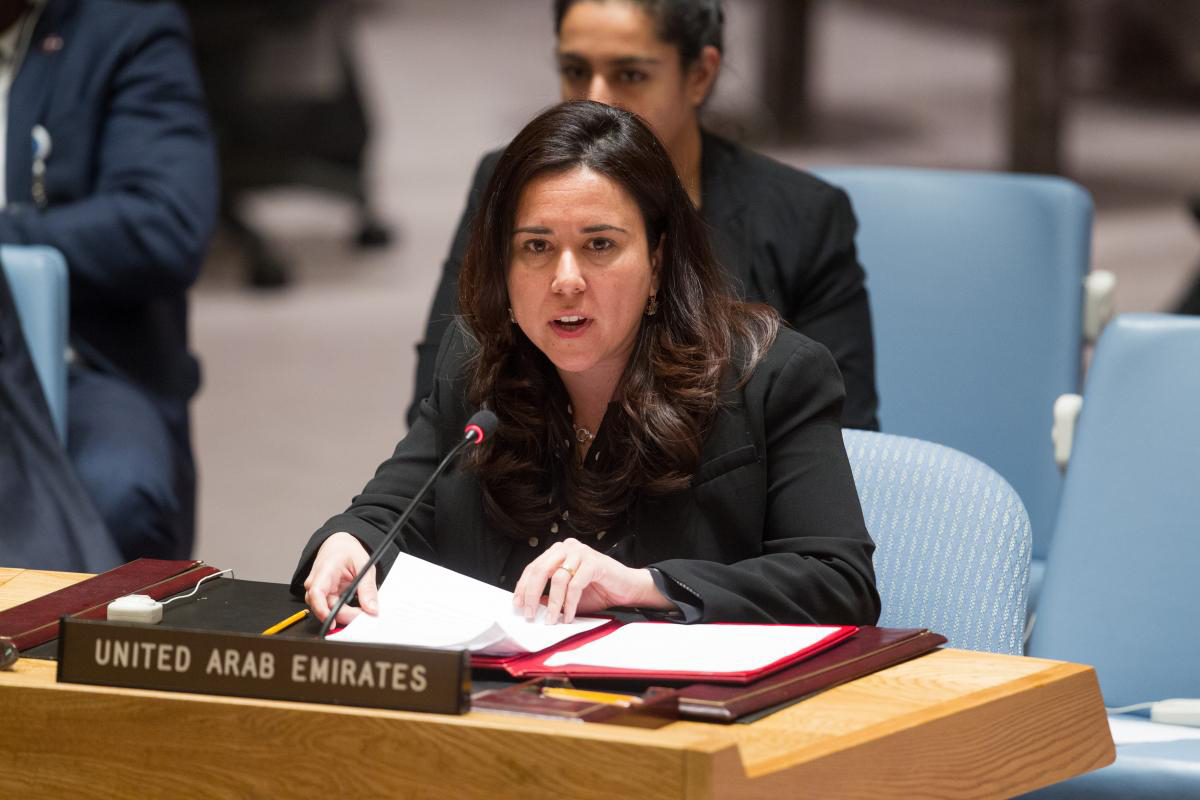
In June 2026, Democratic Senator Chris Van Hollen introduced legislative amendments aimed at using American influence to halt alleged Emirati military support for the rebel Rapid Support Forces (RSF), including suspending arms sales to the United Arab Emirates for as long as it continued providing material support to the group. His proposals received backing from Democratic lawmakers and some Republicans, although they failed to advance through the legislative process at the time.
We cite this important development for two reasons.
First, it confirms that the Sudan file is beginning to find its way into the mechanisms of oversight and accountability within the American legislature. It also reflects the emergence of a political current that believes calls to end the war cannot be separated from holding external actors accused of supporting the rebellion against the state and its established institutions accountable.
Second, it exposes a contradiction within American policy itself. Washington cannot credibly speak about protecting civilians and ending the war while its strategic and economic relationships with certain regional actors remain largely immune to serious scrutiny when those relationships conflict with its declared peace objectives.
Analyses by the British think tank Chatham House indicate that Washington's relationship with Abu Dhabi, together with its calculations concerning Gaza, Iran and the Abraham Accords, influences the American administration's willingness to deploy available pressure mechanisms in relation to Sudan. These analyses also point to the role of external arms supplies, financing and logistical support in prolonging the war, arguing that cutting off these flows is a fundamental condition for any sustainable settlement.
The United Arab Emirates, for its part, continues to deny providing military support to the rebel Rapid Support Forces, despite substantial international reports, foremost among them the 2024 report of the United Nations Panel of Experts, as well as investigations by leading Western newspapers and human rights organizations. Nevertheless, the seriousness of the allegations, reports and investigations accumulated over time demands that the matter be addressed through evidence, independent investigations, transparency and accountability, rather than diplomatic balancing or political statements alone.
The question Washington should ask itself is this: Can a stable regional policy be built on partnerships with actors whose practices contradict America's declared objectives of protecting civilians and preventing the collapse of states? This is compounded by the erosion of trust caused by the region's three-sided war and its repercussions across the Gulf, the Arab Mashreq and the wider world.
Strategic relationships should not become shields against accountability. Nor can economic and security interests justify overlooking the consequences of a war threatening the security and stability of a country with its own history and sovereignty, as well as the security of the entire region.
What Do the American Elections Tell Sudan?
Three fundamental lessons can be drawn from the shift in American electoral politics. These are lessons that should inform official Sudanese thinking and diplomatic engagement.
First: Foreign policy is no longer separate from domestic political calculations.
The American experience has demonstrated that foreign wars, when associated with military expenditure, human casualties, moral contradictions and the interests of lobbying groups, can become influential electoral issues. Accordingly, relying on the continuity of American policy simply because traditional alliances remain intact is an uncertain strategy.
This requires Sudan to develop a political and diplomatic narrative that engages American institutions, both chambers of Congress, research centres, universities, the media, civil society organizations and influential public opinion constituencies, rather than limiting engagement to the executive administration or traditional official channels.
Second: Wars cannot be ended by managing the competing interests of their parties, but by addressing the causes that sustain them.
The Sudanese experience has demonstrated that repeated calls for ceasefires, temporary truces, multiple peace initiatives, and the accommodation of the armed rebellion and its political backers will not produce lasting peace unless the sources of arms, financing and external logistical support are addressed, and unless there is a clear vision for the future of the state and its institutions.
A political settlement must not become a means of rewarding the use of force, legitimizing armed rebellion or imposing a parallel reality upon the Sudanese state and its national institutions.
The peace Sudan needs is not simply an end to the fighting. It requires restoring the state's monopoly over the legitimate use of force, protecting civilians, rebuilding institutions and preparing for a political transition based on national will and Sudanese consensus.
Third: Sudan needs to redefine how it is perceived within American strategic thinking.
Perhaps this is the most important message Sudanese diplomacy should draw from the election results. Sudan should not be presented to Washington merely as a devastated country awaiting humanitarian assistance, or as a party to a military conflict requiring yet another mediation initiative. It should instead be presented as a state of strategic significance within the regional and international security equation.
A stable Sudan would contribute significant value to Red Sea security, stability in the Horn of Africa, Nile Basin security, and efforts to combat terrorism and human trafficking and arms smuggling. It would also help secure international trade routes, in addition to offering agricultural, water and mineral resources that could make it an important partner in global food security and supply chains.
It would be a strategic mistake for Washington to view Sudan solely through the prism of competition with Russia or China, or to reduce its relationship with the country to Red Sea security calculations. Given its historical significance, strategic potential and abundant resources, Sudan has independent national interests and can become a balanced partner of the international community without serving as an arena for settling major-power rivalries, external conspiracies or competing agendas that place its future at stake.
Toward a New American Approach to Ending the War
The shifts generated by the American elections offer an opportunity to reintroduce the Sudan file on a different basis, particularly with the Democratic Party's transition to a majority in both chambers of Congress and the resulting opportunities for legislative oversight, political accountability and institutional scrutiny.
This does not mean assuming that Democratic positions are necessarily uniform, or that the Democratic Party alone holds the keys to ending the war. President Trump retains authority over foreign policy, while partisan divisions over the Middle East remain significant. Nevertheless, a new congressional majority creates greater room to review certain policies, reorder priorities and exert institutional pressure on the administration, transforming the negative dynamics of policy and hostility into a positive basis for constructive engagement.
In my assessment, any serious American vision for Sudan should be built around five interconnected tracks:
1. Ending foreign interference: Using political, economic and military influence to stop the flow of weapons, financing and logistical support to the rebellion and its backers, while holding accountable all those proven responsible for fueling the conflict.
2. Protecting the state and its unity: Dealing with Sudan as one sovereign state with national institutions, while rejecting partition projects, parallel governments and entities imposed through armed force.
3. A realistic political settlement: Supporting an inclusive, Sudanese-led political process that is not imposed from abroad, does not equate the legitimacy of the state and its institutions with that of armed formations, and creates space for national civilian forces without exclusion or monopolization of political representation.
4. Moving from relief to recovery: Linking humanitarian assistance to the rehabilitation of infrastructure and essential services, restoring agricultural and industrial production, reconstruction, creating conditions for the return of internally displaced people and refugees, and restoring the regular functioning of state institutions.
5. Building a long-term strategic partnership: Developing an American vision for cooperation with Sudan in food security, energy, mining, water, healthcare, education, infrastructure and Red Sea security, based on mutual interests and respect for national sovereignty.
Washington must therefore move beyond viewing Sudan as a subordinate file within its policies toward the Gulf or the Horn of Africa. It must recognize that Sudan's stability cannot be held hostage to bilateral regional understandings or the interests of external actors, regardless of the pressure and exhaustion they may impose.
From Reviewing Support Policies to Taking Responsibility for Restraining Escalation in Sudan
One of the most important political lessons Washington should absorb from the latest elections is that reviewing its foreign policies is no longer a political luxury. It has become a necessity imposed by changes within American society and growing opposition to the costs of unconditional alignment with U.S. allies.
If the Gaza issue has brought renewed attention to the debate over American funding and arms supplies to Israel, as well as the limits of political and military support for its government, the scope of this review should not stop at the Middle East. It must also extend to regional roles that contribute to fueling conflicts and prolonging them.
The Sudanese case stands out clearly in this regard. Washington's responsibility is not limited to calling for an end to the war. It also includes using its diplomatic, political and economic influence to curb any external support that fuels its continuation, including the Emirati role in supporting the Rapid Support Forces, as raised and documented in international reports.
It is inconsistent for the United States to call for an end to the war in Sudan while leaving its instruments of influence over relevant external actors below the level of responsibility required.
Moving from crisis management to addressing the root causes requires a clear American position: no funding, no arms and no political cover for any role that contributes to prolonging the war, alongside support for a peace process that safeguards Sudan's unity, sovereignty and national institutions.
Washington is also required to reconsider the double standards applied in its dealings with regional allies and partners. The review of American support for Israel should open a parallel debate about the military and political support received by regional actors and the consequences of such support in fueling conflicts beyond their borders, as is happening in Sudan.
Sudan Is Not a Marginal Issue in the International Stability Equation
The deepest lesson of the American elections is not simply that Democrats defeated Republicans. Rather, it is that American public opinion has become more aware and more willing to hold foreign policies accountable when they fail to reflect its interests and values. Wars that appear geographically distant can become politically close, and alliances, however powerful, are not beyond scrutiny.
From this perspective, Sudan has an opportunity to reassert its case in the language of strategic interests, rather than relying solely on the language of victimhood. The suffering of the Sudanese people is documented in the scale of crimes, violations, destruction and displacement. Yet this reality must be translated into a political and diplomatic project capable of convincing the world that ending the war is not merely a humanitarian obligation, but an ethical necessity for regional and international security.
Washington, which is currently reassessing some of its calculations in the Middle East under pressure from domestic political developments, must look at Sudan differently. It must recognize that the continuation of the war threatens a country of exceptional geographical significance, and that allowing it to disintegrate under the weight of external interference will create a strategic vacuum over which regional and international powers will compete.
The United States is not being asked to adopt Sudan's position without scrutiny. Rather, it is being called upon to approach the country's national, geographical and political realities objectively, and to make ending the war and protecting the unity of the state and its institutions the benchmark for any policy or initiative concerning its future.
Sudan does not need the international management of its crisis as much as it needs an international position that helps it reclaim its hijacked state, halts the external interventions prolonging the war, and opens a safe path for its people to reclaim their homeland and rebuild their future.
“The most dangerous mistake international politics can make is not simply misjudging a country, but allowing its collapse to continue until it becomes a threat to the stability of an entire region. Sudan is not a marginal feature on the world's geopolitical map; it is a pillar of the international stability equation. Ending the war there is therefore not a favour to its people, but an investment in regional security and the international order.”
Ultimately, the credibility of American leadership should not be measured solely by its ability to stop wars that threaten its own interests, but also by its willingness to review its policies and hold allies and partners accountable when their influence and support mechanisms become part of the making and perpetuation of wars and conflicts beyond their borders. Sudan must not be an exception to this principle.
Post your comments
Photo of the Week

Khartoum – Sudanow – Sudanese explorer Shams Al-Din Abdel Halim Al-Bashir is preparing to embark on a journey to Qatar, carrying a national and humanitarian message aimed at raising awareness of Sudan’s issues, particularly the plight of women and children affected by the war. The journey will be undertaken under the slogan: “For the Women and Children of...
More-
08 November, 2026
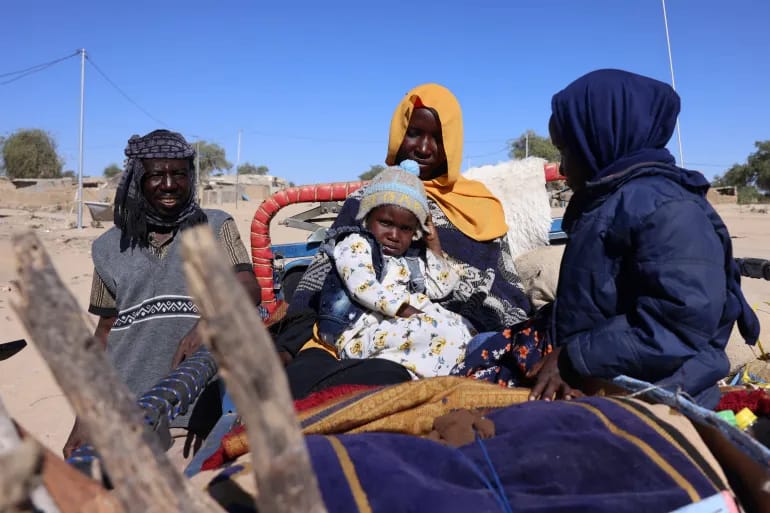
Stories from Inside the Battlefield Calls on Displaced Residents of El Fasher to Return
“Al-Tayashi’s Appeal” – “Killing the Victim, Then Walking in Their Funeral Procession!” Social Media Platforms Mock and Ridicule the Calls to Return: A Political Farce Reopening Destroyed Markets and Hospitals Does Not Erase the Record of Violations: A Hollow Performance Return Begins with the Withdrawal of the Militia, the Restoration of Security and Justice, and the Rebuilding of Trust K...

Contact Us

Address: Sudan News Agency (SUNA) Building, Jamhoria Street, Khartoum - Sudan
Mobile:+249 909220011 / +249 912307547