



Old Dongola: A City Buried Beneath the Sands Reveals the Secrets of Nubian Civilization
15 November, 2026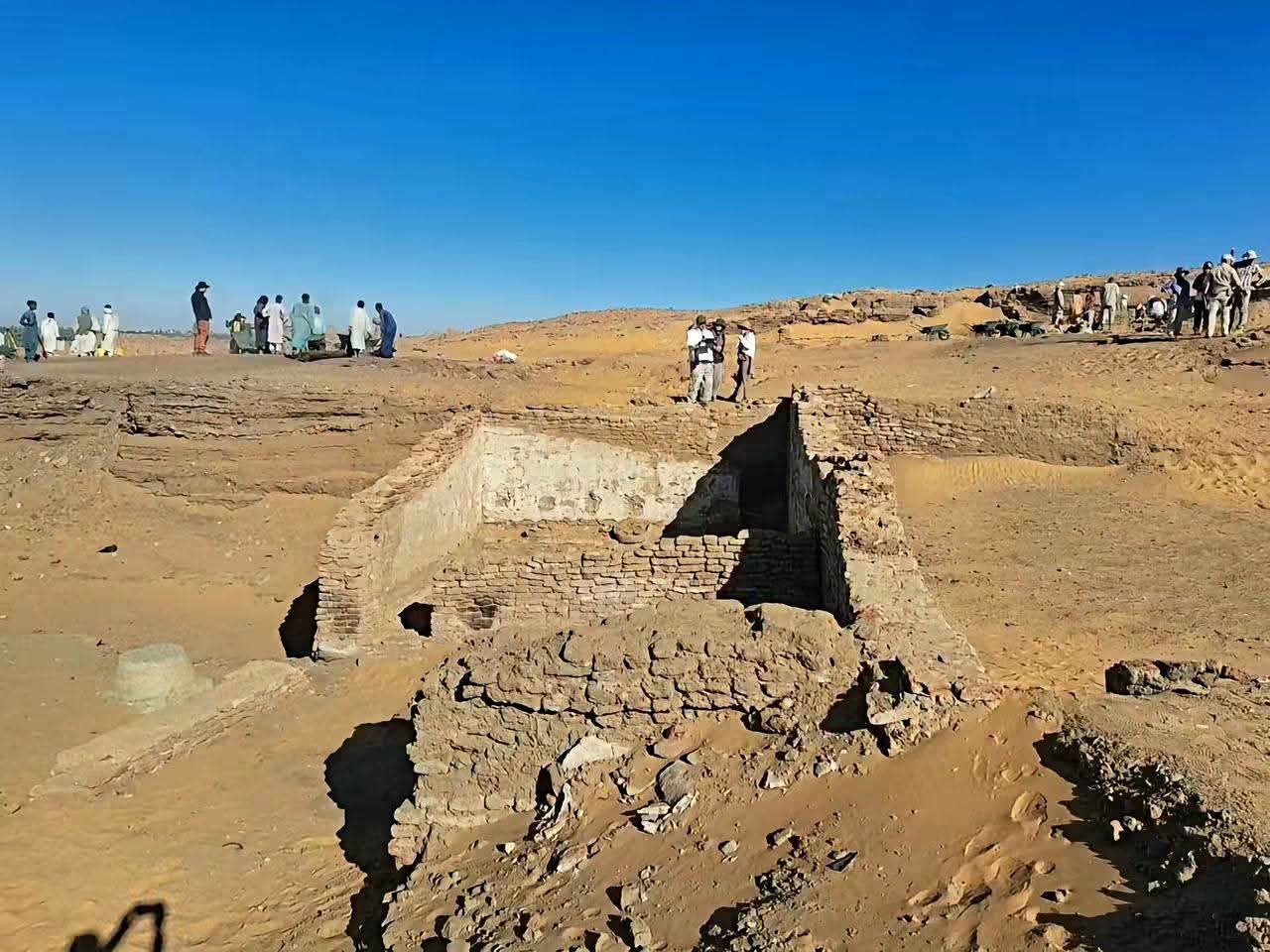
From the heart of Sudan’s Northern State, specifically in Al-Gold Locality, renewed archaeological discoveries are opening a window onto the history of the Kingdom of Makuria. They are revealing a rich heritage in which Christianity and Islam coexisted, while offering Sudan an opportunity to transform this historical wealth into an economic, cultural, and tourism asset.
Khartoum – (Sudanow)
Beneath the sands of Old Dongola, vast chapters of Sudan’s history remain buried, waiting to be brought to light. Located in Al-Gold Locality in Sudan’s Northern State, this archaeological site was far more than an ancient settlement. It was the capital of the Nubian Kingdom of Makuria and one of the region’s most prominent urban centers, witnessing political, religious, and cultural prosperity during the medieval period.
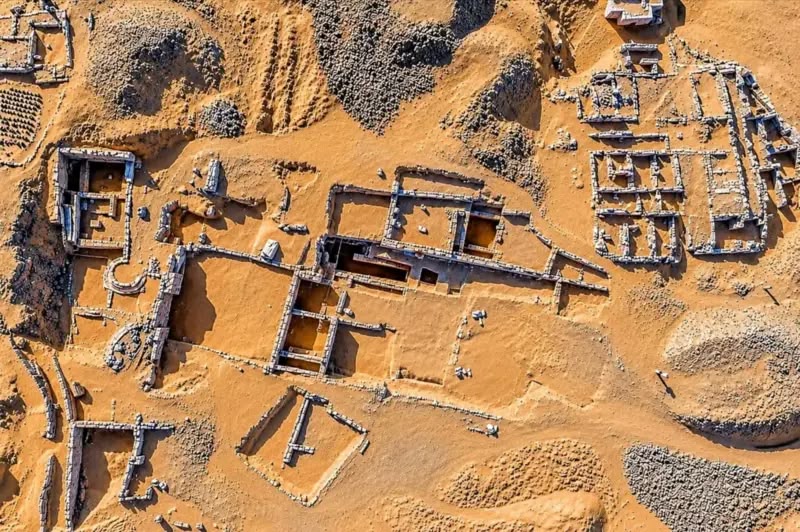
Old Dongola derives its significance from architectural and historical remains that reflect successive civilizations and religious traditions. The remains of churches, palaces, domed structures, and mosques stand side by side, illustrating a historical period in which Christianity and Islam coexisted. The site is also home to what is recognized as the oldest preserved mosque in Sudan, giving it exceptional importance for the study of architectural history and the religious and social transformations of the region.
With the renewal of archaeological excavations, expectations are growing about the remains and structures still concealed beneath the layers of earth. This places Old Dongola among the most significant archaeological sites for re-examining important aspects of Sudanese history and creates opportunities to harness this heritage to promote cultural tourism and present Sudan to the world as a land of ancient civilizations.
New Discoveries Reveal the Depth of the Historic City
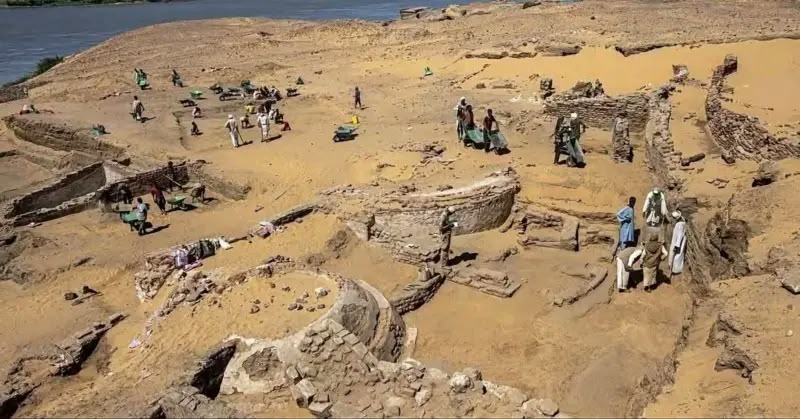
As part of renewed interest in the site, a large media delegation, accompanied by senior officials, conducted a field visit to the archaeological site of Old Dongola in Al-Gold Locality to examine the scientific findings relating to the latest discoveries by the joint Sudanese-Polish archaeological mission.
According to the Sudan News Agency (SUNA), the head of the Polish archaeological mission, Professor Artur Obłuski, revealed that the latest discovery concerns the Great Church at the site. He explained that the structure's considerable size and its extension to a depth of approximately 11 meters beneath existing buildings require highly precise and cautious excavation work, given its intersection with residential and architectural layers dating back to the Funj Sultanate period.
Obłuski noted that the immediate priority is to protect the discovered architectural structures by covering parts of them with fine sand, alongside a project to restore the oldest preserved mosque in Sudan. These measures aim to safeguard the historical remains against deterioration and collapse.
For his part, Dr. Ibrahim Abdelrahman, Secretary-General of the Supreme Council for Tourism and Antiquities, affirmed that Old Dongola represents an integrated historical complex comprising the palace, the famous church, and the domed structures. He noted that the site produces significant discoveries every excavation season, adding to knowledge of the country's history.
He praised the partnership between the Polish mission and the General Authority for Antiquities and Museums, which has continued for nearly six decades, and affirmed that coordination between the two sides would continue to document and reveal further details of the recent discoveries.
Meanwhile, Zuhair Al-Tayeb Banga, Secretary-General of the Supreme Council for Culture and Information and Acting Minister of the Northern State, commended the pioneering work of the archaeological mission led by Professor Artur Obłuski, who is affectionately known as "Ahmed the Sudanese."
He emphasized the importance of local and national media in highlighting Sudan's cultural heritage professionally, pointing out that the Northern State possesses immense historical and cultural wealth that could contribute to development and help turn challenges into opportunities.
Obłuski also explained that the mission's work, which has continued since 1964, has documented unique historical and religious evidence, including a letter attributed to King Qasqush dating back approximately five centuries, the dome of Jola Malakh, and the Suwar Al-Dahab arena.
He expressed his satisfaction at the resumption of fieldwork, which was warmly welcomed by local residents following a two-year suspension. He also reaffirmed the mission's commitment to working with the local community through educational programs and the installation of solar energy systems to provide water supplies.
Historical Interpretations and Questions About Nubian Civilization
Offering a broader perspective on the significance of these discoveries, Professor Muath Sharafi, a consultant in child and adolescent mental health, an expert in crisis and disaster management, and a researcher in Sudanese civilization, spoke about the importance of reassessing the region's history and looking beyond the archaeological structures that have so far been brought to light.
Sharafi believes that Dongola and the wider Nubian region constitute an important center of civilization that deserves further research and investigation. He pointed out that some interpretations circulating about possible connections between archaeological sites and figures or events mentioned in religious and historical narratives require rigorous scientific examination and comparison with historical sources, inscriptions, and archaeological evidence.
He also referred to historical studies and interpretations exploring possible links between northern Sudan and certain narratives associated with prophets and ancient civilizations, including claims attributed to earlier German studies concerning the Kingdom of Prophet Solomon.
However, identifying specific locations as the homes of prophets or as the settings of particular religious events remains a matter requiring documented archaeological and historical evidence. Such claims cannot be established solely on the basis of circulating narratives.
These discussions underscore the importance of expanding research into the history of Nubia and ancient Sudan, drawing on archaeological missions, historical documents, and inscriptions while avoiding conclusions that lack scientific verification.
Cultural Tourism: From Archaeological Heritage to Employment Opportunities
The significance of the discoveries at Old Dongola extends beyond their historical and scientific value. They could become an important economic driver for Sudan, particularly at a time when the country needs to diversify its sources of income and rebuild what has been destroyed by war.
The site possesses the potential to become an international cultural tourism destination, creating opportunities to employ and train young people as tour guides while stimulating hospitality, restaurant services, traditional crafts, and other visitor-related activities.
Small-scale businesses, including guesthouses, local hotels, traditional restaurants, and handicraft outlets, could form the foundation of an economic network that directly benefits residents of the surrounding communities.
In this regard, information about the Polish mission's activities indicates that training programs for local residents to work as tour guides have already begun, alongside efforts to establish a tourism accommodation project. Such initiatives could help connect archaeological preservation with local development, provided that adequate planning, funding, and oversight are secured.
Scientific Impact: Sudan on the Global Archaeological Research Map
The continuation of the joint Sudanese-Polish mission offers an opportunity to strengthen Sudan's presence in international academic institutions and research centers.
The new discoveries open avenues for specialized studies into the history of the Kingdom of Makuria, Nubian architecture, religious and social transformations, and patterns of urban life in ancient Sudanese cities.
They could also facilitate research partnerships with international universities and archaeological institutions, while providing opportunities to train Sudanese professionals in excavation, restoration, the preservation of historic buildings, and the analysis of inscriptions and historical documents.
The scientific benefits extend beyond the artifacts uncovered through excavation. They also include developing national expertise capable of managing and preserving archaeological sites, reducing dependence on foreign specialists and strengthening the participation of Sudanese researchers in documenting and interpreting their country's history.
Sudanese Identity: A History Embracing Diversity
One of the most important cultural dimensions of Old Dongola is the rich historical model it offers for understanding the multiple foundations of Sudanese identity.
Sudan's history has never been defined by a single historical period or a homogeneous cultural affiliation. Rather, its identity has evolved through centuries of interaction among Nubian, African, and Arab cultural influences, Christianity and Islam, and diverse local traditions.
Christian Nubia flourished for many centuries before Islam spread and became firmly established in the region. Archaeological evidence also reveals patterns of interaction and coexistence among different religious and cultural communities.
Old Dongola therefore offers an opportunity to present Sudanese history in educational curricula and cultural and media productions in a more comprehensive way, moving beyond one-dimensional historical narratives and recognizing diversity as an essential component of Sudanese identity.
The presence of a church, a mosque, and domed religious structures within the same historical landscape represents more than architectural diversity. It invites reflection on the history of religious and social interaction and on the ability of communities to accommodate profound transformations over time.

Diplomatic Impact: A Different Image of Sudan
The continuation of the Polish archaeological mission in Sudan despite the challenges posed by war and insecurity carries an important message about the value of international scientific and cultural cooperation.
The longstanding partnership and the resumption of field activities demonstrate that heritage preservation is a responsibility extending beyond national borders. They also provide an example of cooperation between Sudanese institutions and their international counterparts.
Sudan can capitalize on this scientific presence to expand its relations with universities, cultural institutions, and international heritage organizations, while attracting restoration, research, training, and responsible tourism investment projects.
Highlighting archaeological sites and scientific achievements in international media can also help present a more balanced image of Sudan. The country's identity need not be defined solely by war and conflict; it can also be recognized for its ancient civilization and for a society determined to preserve its cultural memory.
Old Dongola: Beyond the Discoveries
What Old Dongola reveals goes far beyond the Great Church, the historic mosque, the palace, or the domed structures. The site represents an open historical record of Sudan and a window into Nubian civilization and its political, religious, and social transformations.
The real opportunity lies in moving beyond archaeological discovery toward a comprehensive national project that brings together scientific excavation, heritage protection, professional training, tourism infrastructure development, and the involvement of local communities in managing and benefiting from their cultural resources.
At a time when Sudan is striving to rebuild and restore its economic vitality, its archaeological heritage emerges as a cultural and developmental asset capable of opening new horizons for future generations.
Beneath the sands of Old Dongola, Sudan is not merely recovering stones from its past. It is reclaiming part of its memory, identity, and civilizational standing, while discovering in this heritage an opportunity to build a future founded on knowledge, diversity, and sustainable development.
Post your comments
Photo of the Week
Khartoum – Sudanow – Sudanese explorer Shams Al-Din Abdel Halim Al-Bashir is preparing to embark on a journey to Qatar, carrying a national and humanitarian message aimed at raising awareness of Sudan’s issues, particularly the plight of women and children affected by the war. The journey will be undertaken under the slogan: “For the Women and Children of...
More-
08 November, 2026
Stories from Inside the Battlefield Calls on Displaced Residents of El Fasher to Return
“Al-Tayashi’s Appeal” – “Killing the Victim, Then Walking in Their Funeral Procession!” Social Media Platforms Mock and Ridicule the Calls to Return: A Political Farce Reopening Destroyed Markets and Hospitals Does Not Erase the Record of Violations: A Hollow Performance Return Begins with the Withdrawal of the Militia, the Restoration of Security and Justice, and the Rebuilding of Trust K...

Contact Us

Address: Sudan News Agency (SUNA) Building, Jamhoria Street, Khartoum - Sudan
Mobile:+249 909220011 / +249 912307547