

Sudan’s 16 Days of Activism Against Gender-Based Violence Continue
29 November, 2026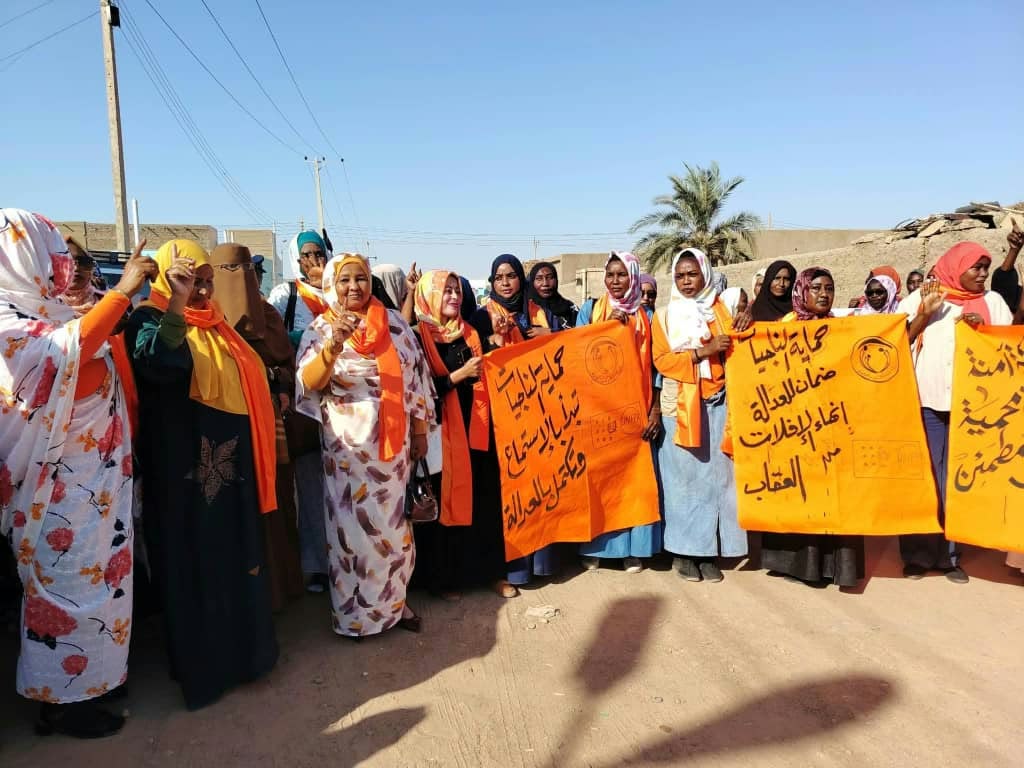
Women in Sudan: From Violations to Justice and Redress
War Has Widened the Circle of Risks, Leaving Survivors in Need of Protection, Psychological and Legal Support
Justice, Accountability, and Economic Empowerment: Critical Priorities
Ending Violence Requires the Participation of All Segments of Society | Government Interventions
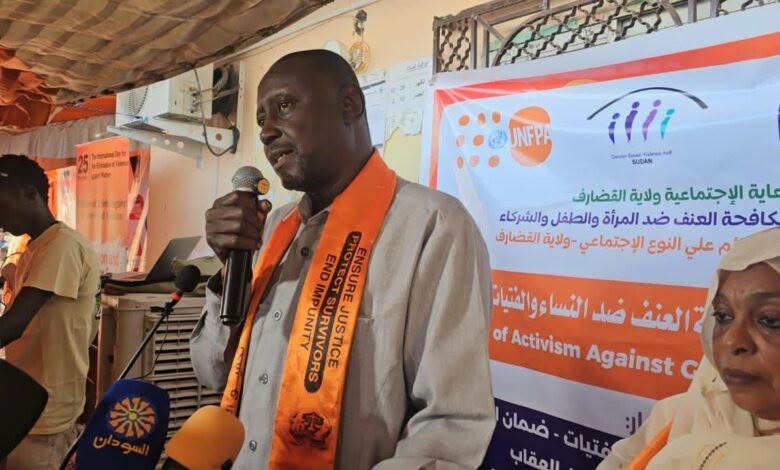
The United Nations’ annual 16 Days of Activism Against Gender-Based Violence campaign continues under the theme: “Unite to End Violence Against Women and Girls: Ensure Justice, Protect Survivors, and End Impunity.”
The campaign comes at a time when Sudan is facing some of the most brutal forms of violence against women, amid violations and crimes committed by the Rapid Support Forces (RSF) militia, including killings, rape, kidnapping, and enslavement. Women and girls have also endured physical, psychological, and social abuse in conflict zones, placing the protection of Sudanese women at the forefront of humanitarian and human rights priorities and making the campaign an opportunity to renew calls for justice, accountability, and an end to impunity.
The Campaign’s Legacy
The 16 Days of Activism campaign carries historical and human rights significance, extending beyond seasonal awareness initiatives. It begins on November 25, designated by the United Nations General Assembly in 1999 as the International Day for the Elimination of Violence Against Women, in remembrance of the three Mirabal sisters, who were assassinated in the Dominican Republic in 1960 because of their political activism and opposition to dictatorship.
Activists had adopted November 25 as the starting date for the campaign in 1981, renewing their commitment to combating violence against women. The campaign concludes on December 10, Human Rights Day, commemorating the adoption of the Universal Declaration of Human Rights in 1948.
The campaign thus links the protection of women to the broader safeguarding of human rights, affirming that violence against women is neither a private family matter nor a limited social issue, but a violation of human rights that demands protection, justice, and accountability.
The Scars of War
The campaign takes on heightened significance in Sudan, where women have found themselves confronting the consequences of a war that has violated their bodies, dignity, and fundamental rights.
Women and girls in conflict zones have faced grave risks at the hands of the terrorist militia, including killing, rape, kidnapping, and enslavement, in addition to forced displacement, loss of shelter and livelihoods, and the burden of supporting their families under extremely complex humanitarian conditions.
Women’s suffering has not been confined to direct violations. Survivors also face psychological, social, and economic challenges that require specialized care and legal protection, free from social stigma or any attempt to blame victims for what they have endured.
A Humanitarian Message
The Unit for Combating Violence Against Women and Children at the Ministry of Human Resources and Social Welfare selected the women’s prison in Omdurman as the venue for the launch of the national campaign, in a move carrying a humanitarian message that women’s dignity and rights are not diminished by their presence in correctional institutions, and that care, rehabilitation, and empowerment remain fundamental rights for all women.
Minister of Human Resources and Social Welfare Mutasim Mohamed Saleh, addressing the event, emphasized the importance of unifying the efforts of the state, society, civil society organizations, religious leaders, and native administration institutions to combat violence against women and girls, ensure justice, protect survivors, and end impunity.
He stressed that ending violence is a collective responsibility requiring the participation of all segments of society.
Meanwhile, Dr. Salima Ishaq, Head of the Women and Child Advisory Office, affirmed the political commitment of the heads of the Sovereignty Council and the Cabinet to women’s issues. She explained that the atrocities women have endured during the war have placed their concerns at the forefront of national priorities.
She noted that women are currently facing significant challenges in Blue Nile, Kordofan, and Darfur, emphasizing that areas under militia control offer women neither safety nor protection. She expressed hope that the war would end and that women would finally find the protection they need.
Khartoum State Prisons Director, Police Major General and Human Rights Officer Dr. Taj Al-Sir Babiker Sir Al-Khatim, also affirmed that the role of correctional institutions extends beyond enforcing sentences to safeguarding human dignity and providing inmates with healthcare, psychological, educational, and social services, while also caring for their children and ensuring their rights to care, education, and a dignified life.
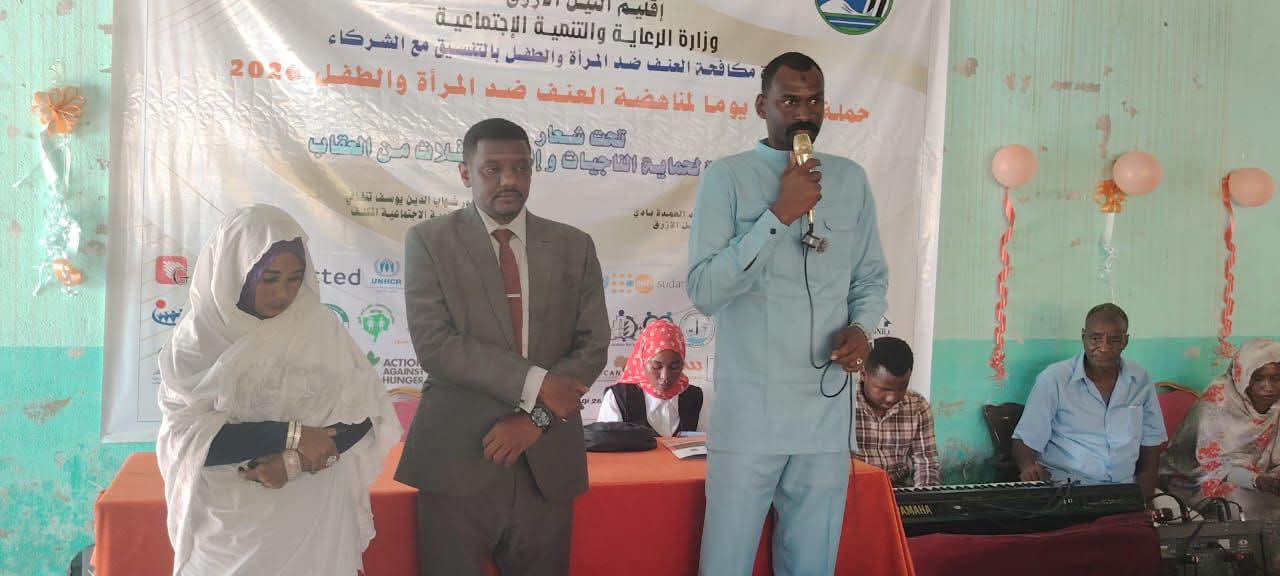
In the same context, Amira Azhari, Director of the Unit for Combating Violence Against Women and Children, said that selecting the Omdurman women’s prison as the campaign’s launch venue conveys a message that incarceration does not diminish women’s dignity or rights.
She announced initiatives to establish legal consultation and psychological support clinics, alongside vocational training, productive skills, and marketing programs. These initiatives will also provide opportunities for inmates to showcase and sell their products at exhibitions in Khartoum State, with plans to expand the programs to other states.
Faith, Values, and Human Dignity
On the religious and societal dimension, Dr. Nada Fadlallah Hassan, Director of Al-Nada Association for Rural Development and National Group Coordinator, believes that launching the 16 Days of Activism campaign in Sudan carries particular humanitarian and social significance, especially given the exceptional circumstances facing the country and the resilience demonstrated by Sudanese women in confronting war and displacement, shouldering family responsibilities, and participating in community solidarity initiatives.
In her remarks to Al-Karama, Dr. Nada affirmed that protecting women and preserving their dignity should be rooted in the authentic values that bring together the tolerant teachings of Islam and Sudanese traditions grounded in compassion, honor, decency, and respect for women.
She noted that violence against women—whether physical or verbal abuse, deprivation of education or inheritance, or violations of safety and dignity in conflict and displacement settings—contradicts the objectives of Islamic Sharia and the authentic values of Sudanese society.
Dr. Nada also highlighted the need to distinguish between the true teachings of religion and certain social traditions that may be invoked to justify abuse or silence women in the name of concealment, family preservation, or social cohesion.
She stressed the importance of women upholding noble values and the tolerant teachings of the divine faith, explaining that genuine protection and discretion mean preserving women’s dignity and safeguarding them from harm, not concealing injustice.
A family governed by fear, she said, loses the meaning of affection and mercy established by the Holy Qur’an. She called for complementary roles among religious institutions, the media, civil society organizations, native administrations, and families in raising awareness and combating violence.
An Important Conclusion
As the 16 Days of Activism campaign continues through December 10, the key challenge facing Sudanese authorities is to transform the campaign into a sustained action program that brings together government institutions, judicial bodies, organizations, and communities to protect women and girls, secure justice for survivors, hold perpetrators of violations accountable, and strengthen economic and social empowerment.
Sudanese women, who have paid an enormous price for the war and continue to shoulder the burdens of family and society under extraordinary circumstances, need more than sympathy. They need protected rights, equitable justice, and effective safeguards.
The most important message remains that women’s dignity is not a slogan reserved for an annual occasion. It is a human, religious, and societal right that the state must uphold, the law must protect, and society must reinforce—throughout the year.
Post your comments
Photo of the Week

Khartoum (Sudanaow Magazine) - In the heart of the capital Khartoum, specifically in the upscale Al-Taif neighbourhood, a young Sudanese man succeeded in turning his childhood dream and hobby of raising birds into a unique environmental and tourism project in Sudan and the region. It is the Marshal Nature Reserve, which had become a destination for visitors, embassies, and intern...
More-
29 November, 2026
Sudan’s 16 Days of Activism Against Gender-Based Violence Continue
Women in Sudan: From Violations to Justice and Redress War Has Widened the Circle of Risks, Leaving Survivors in Need of Protection, Psychological and Legal Support Justice, Accountability, and Economic Empowerment: Critical Priorities Ending Violence Requires the Participation of All Segments of Society | Government Interventions The United Nations’ annual 16 Days of Activism Against Gender-Based Violence camp...

Contact Us

Address: Sudan News Agency (SUNA) Building, Jamhoria Street, Khartoum - Sudan
Mobile:+249 909220011 / +249 912307547