


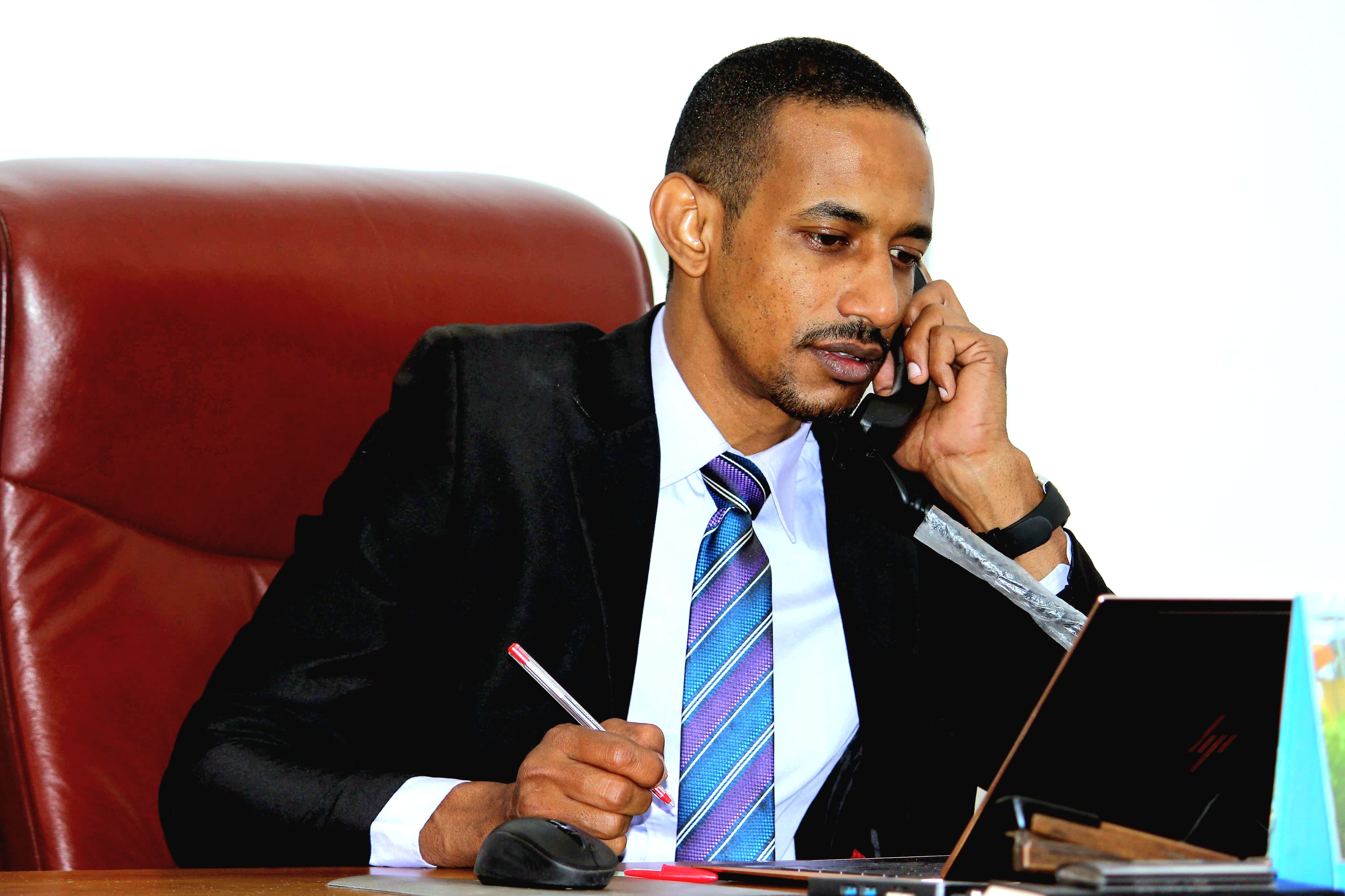
Ms Sara Nugdallah: First Sudanese woman to assume the post of the Chief of the Political Bureau
07 June, 2011
She is the first woman to assume the post of the Political Bureau of the National Umma Party. She is a competent academician with remarkable political experience that qualified her to attain her prominent status. She recently spoke with Sudanow and here are excerpts of the interview:
QUESTION: How do you view the current political changes around our region: do you think it is a healthy development from which we can learn, are those changes due to external pressures and where is Sudan’s position from that?
Answer: The change which took place in many an Arab country was a natural outcome of oppression under which the people were placed, and for decades. The change reflected the demands and aspirations of the peoples for freedoms. We hope that no party, whether Islamists or others, would steal those revolutions of the people. In Egypt, for instance, after the overthrow of the system, the revolutionists were at loss, which is an indicator that it was a spontaneous and genuine revolution and not spurred by external motives or a political party. In fact, it was led by a group of youth with the purpose of reform and democratic change. The people who broke the revolutions must succeed in setting up political solutions in the constitution besides restructuring the parties and their laws and changing the state’s public service structure. Additionally, other countries should make use of the experiences of their counterparts in effecting democratic transformation and the leaders must listen to the voice of their peoples. In Sudan, bloodletting must stop and there should be a smooth transition where like Saddiq al-Mahdi said “we should make our own equation”.
QUESTION: To what extent do you think the youth are capable of assuming leadership and in achieving the change?
Answer: Rebuilding the Sudanese individual to lead the change: the youth are capable of leading and changing if they are oriented in the right manner. The youth in Sudan are facing challenges which are not of their making. Unfortunately, few of the youth are concerned with the Sudanese question and challenges and therefore they need a program that addresses their concerns and prepares them to be involved. The State mobilized the youth and militarized them in a case that could not be a jihad issue. This caused many youth to be religiously obsessed. There is a need for basic revision to rebuild the Sudanese citizen because we are suffering from a major defect regarding the educational syllabuses and therefore, the coming democratic transformation should focus on accurate and wide restructuring of the educational syllabuses at all levels to re-educate the citizens on the national issues to build a nation that concerns with its homeland. We depend on the youth to play a major role in the coming change.

We at the Umma party have a comprehensive plan where the political bureau has formed a committee to prepare for sector conferences for the youth and students each a part in the coming two months. State conferences will be held for selecting state representatives from the state youth sectors to participate in the general youth conference.
Presently, the party is implementing a comprehensive plan for a comprehensive revision among the youth cadres after the deterioration in the youth sector in the past four years due to internal disputes. This process resulted so far in attracting many active and capable cadres. At the youth and student sectors, %70 of the leadership at the level of the secretariat general of the political bureau is under the age category of 30-50, which is a positive indicator.
QUESTION: of recently has there been any change in the Sudanese community, and if yes, was it for the better or worse and do you have any suggestions?
Answer : The Sudanese community is suffering from many problems including drugs, school drop-out, homelessness and poverty. All these challenges are the outcome of political and economic factors. Drugs are spreading among great numbers of university students. We need rehabilitation programs to reform the society and rehabilitate many of the youth affected by the various negative phenomenons and reintegrate them into the community. There is also need for active cultural and sports programs to encourage the various skills and talents of the youth.
QUESTION: Are there any indicators that Sudanese woman could be President of Sudan soon, and if that did happen, what would be her first presidential decision?
Answer: Sudanese woman are qualified to assume all leadership positions and they have the right to run for the presidency in the coming era (as one Sudanese lady did in the past presidential election).

QUESTION: Don’t you think the Sudanese women have been given many opportunities but she haven't exploited them yet? What are the reasons?
Answer: Sudanese women, with their contributions and participations, are ahead of all Arab and European countries, but her concerns in the past period focused on politics. There are many educated women who think entering the field of politics is a crime and therefore they need a great effort on our part. Politics means discussion of our daily life, i.e. administering the public affair. It is necessary that we have political interest. The issue is how to motivate women to assume decision-making posts with regard to education and public services such as education, electricity, water, health and accommodation and to preserve the gains snatched and secured for them by the pioneering Sudanese women. The reason behind women’s failure to exploit the opportunities is lack of training and lack of self-confidence and that should change.
QUESTION: Do you think women have role in the political decision-making and what about your experience in this respect?
Answer: I have been chairperson of the Umma Party’s Political Bureau. I believe it was a rich and valuable experience, but you can ask the members of the bureau about their viewpoints regarding a woman’s chairmanship of the bureau. However, we are about to present the bureau’s performance for evaluation in terms of implementation of decisions, accomplishments and barriers. This will be discussed in a meeting of the bureau. The bureau comprises of competent and capable members. The bureau has twelve committees; three of them are chaired by women. The greatest challenge we faced during the chairmanship was the decision of boycotting the recent elections. We have exerted great efforts and there were two teams, one wanted the party to participate and they had their justifications and the other party did not want the party to participate, but in the end we declared our decision to boycott the elections. It was a difficult decision.
We, at the Umma party, really have a pioneering experience regarding the woman’s participation and I do not think any party has preceded us in that where since 1986, the party is adopting the quota system which avails woman in the party the opportunity to play an active role at all the party bodies in the center and the states. The women’s participation at the leadership of the party’s bodies amounted to %20 including the Political Bureau which is the legislative body of the party.

The Mahadist School has attached a great concern to the women and their issues where Imam Al-Mahdi has granted the women three basic rights including the education, work and self-determination. Imam Adel-Rahman, on his part developed the women education and supported the pioneer of women education Babikir Badri who was a supporter of Umma party.
The woman’s participation in public life dated back to 1940 when Ustaza Madina Abdullah established the first night school for women at Wad Nubawi area in Omdurman. Additionally, Imam al-Saddiq al-Mahdi has resolved the difference over CEDAW agreement with its 30 items when he said that the agreement did not contradict with Islam and that Islam has granted the woman all her rights except for the difference over her biological function.”
QUESTION: How do you view regionalism and diversity?
Answer: Diversity is a blessing and not otherwise.
QUESTION: The State has adopted the market policy, how do you evaluate that?
Answer: The liberalization policy is a double-edged weapon that has destroyed the successful agricultural schemes and neglected the pastoral sector. It has further introduced corrupt commodities without monitoring or standards. As for the evaluation, there is a need for convening of a national economic conference.
QUESTION: Who is responsible for the corruption?
Answer: Many factors have contributed to spread corruption everywhere and intended to destroy the community values and the Sudanese heritage. They have destroyed all public institutions. Therefore, we call for reforming and restructuring the Sudanese State institutions.
QUESTION: The reconciliation initiatives among the political parties, for instance in Palestine between FATH and Hamas, could they contribute to put an end to the bloodletting and resolve the issue of Palestine?
Answer: Unification of the Palestinian internal from was a positive and delighted step to face the Israeli enemy and constituted one of the points in the transformation in the Arab world.”
QUESTION: The political activities in universities have caused many problems and led to closure of some universities for more than a year. Are you happy with what is happening and how the issue of violence in the universities could be resolved? What are the reasons behind university violence and who is responsible for that?
Answer: I must stress on the importance of the political activities withiin universities as they upgrade the values dialogue and the political address. Regarding the violence and non-recognition of the other, I must say that unfortunately there is a clear weakness and non-democratic exercise and violence. Omdurman Ahliya University has previously worked out the Students’ Ethical Charter but it was not translated on the ground. The students need training and re-education on democracy. The Ahliya University will celebrate its silver jubilee on November and organize a conference that will discuss the issue of students’ violence among other issues.”

QUESTION: You have presented a study on how to halt desertification from a mathematical point of view. Has the study been exploited at the local or regional level?
Answer: “Unfortunately I have distanced myself from mathematics and dedicated myself for the administrative work at al-Ahliya University. I supposed to have continued and shift the study to a level of PHD”.
CV of Ustaza Sara Nugdalla
Her father is late Prince Abdalla Abdul-Rahman Nugdalla, a founder and a prominent leader of the National Umma Party. He and his brother Prince Mohamed Nugdalla were the only persons within the entity of al-Ansar (Imam al-Mahdi’s supporters) who were granted the title of “Prince”. Her mother is late Zainab Awad Jibril.
Date and place of birth: 16/12/1945 -Wad Medani town
Address: Omdurman Ahliya University- P.O Box: 786- Omdurman- Sudan- General Center of National Umma Party- Omdurman
E-mail: s.nugdallah@yahoo.com
Telephone: 87556583- Mobile: 0912354228
Education and training sessions:
Wad Nubawi Primary School
Al-Ahfad General Secondary School
Omdurman High School 1974
BSC in mathematics- Cairo University- Khartoum Branch 1978. she was first in her batch and was awarded a Certificate of Acknowledgement by the university
Master Degree in Applied Mathematics- School of Mathematical Science- University of Khartoum- 1983
A course on Computer Sciences for executive leaders- SPIE Institute- Rome, Italy- December 1985
Experience: Contracts:
Undersecretary of Omdurman Ahliya University- since 1/5/2007
Deputy Dean Faculty of Applied Sciences and Computer (October 2000- April 2007) Omdurman Ahliya University.
Head of Chemistry and Mathematics Division- Faculty of Applied Sciencies and Computer- Omdurman Ahliya University- 1992-2000
Participating Teacher since April 2004
Teaching Assistant since October 1992 till March 2004
A Lecturer of Mathematics- Omdurman Ahliya University- 1989- 1992
Assistant Director of Public Service Affairs until November 1989 when she was relieved fro public interest with a Republican decisionNo. (6c6).
First budget inspector- 1985
Service inspector- April 1983
Service affairs inspector- 1979
Voluntary posts:
Cooperate lecturer at the School of Mathematical sciences- University of Khartoum- 1980- July 1986
Chairperson of the Administrative Committee of the Urban Water Authority Council – 1986- 1989
Member of the Board of Directors of Sautal-Umma newspaper- 1985-1989
Member of the Council of Founders of Omdurman Ahliya University Board- 1985 up to date
Member of the Board of Trustees of Omdurman Ahliya University- 1989- 1994
Founding member and Secretary of the Teaching Staff Board of Omdurman Ahliya University- 1989- 1995
A cooperate lecturer at Al-Ahfad University for Girls- 1990- 1994
Contributions in field of women services:
Setting up a program for eradicating the women’s occupational illiteracy and supervising its implementation through the Woman Secretariat at the National Umma Party.
Contributing to upgrading the rural women via opening training centers such as al-Sahwa training center in Al-Gezira Aba and Al-Sahwa training center in El-Fasher.
She has been organizing lectures, seminars and workshops in different town in Sudan to upgrade the women sector since 1985 up to date.
She was honored by Al-Ahfad University for Girls and the UN Development Programme (UNDP) (Good Governance Programme) in March 2006 as part of the 100th anniversary of girls’ education in Sudan in recognition of her active contributions in field of women education and decision-making.
Political contributions as part of Umma party:
Chairperson of the Political Bureau of the National Umma Party- 2009 up to date
Assistant to the Chairman of the National Umma Party- 2004
Rapporteur of the Transitional Political Bureau of the National Umma Party- (August 2000- April 2004).
Spokesperson of the National Umma Party (October 2000- April 2004)
Chairperson of the Secretariat Committee entrusted with preparing for the party’s 6th General Conference- 2002- 2003
Member of the Higher Command which led the secret work of the party inside Sudan during the extraordinary period (June 1989- August 2000)
Member of the party’s Organizational Secretariat- 1986- 1989 and also member of the party’s elections committee and the research and studies committee.
Secretary of the party’s Women Secretariat- 1986- 1989
She represented the National Umma Party in many of the delegations inside and outside the country
The party’s representative in the National Democratic Women’s Alliance
Contributions to public work;
Member of Umahat Al-Salam (Peace Mothers) Society- 1986- 1989
Member of Babikir Badry Scientific Society for Women Studies- 1986 up to date
Member of Imam Al-Mahdi Charitable Society- 1986-1989
Member of the Arab Society for Combating Desertification- 1985
Member of the Arab Society for Human Rights
Representative of the Women Alliance in the Higher Secretariat of the National Democratic Alliance -1991- 1998
Member of the Cultural Committee of Abdul-Karim Merghany’s Cultural Center- 1998
Papers and researches:
Random Dispersion of Keller Particles
Woman in Peace
Importance of Women Participation in Decision-making
Sudanese Women’s Political Organizations, with focus on the woman in the National Umma Party
How to stop desertification from a mathematical point of view
Political participation of Sudanese women
CEDAW from an Islamic Prospect
A Strategy for the Sudanese Woman
Prospect of the National Umma Party towards Peace in Sudan
Participations in conferences, workshops and important meetings:
Desertification in Arid land conference- December 1985
Arab Organization for Human Rights Conference- 1986
General Conference of the Egyptian Al-Amal (Labor) Party- Cairo 1987
The Popular Conference for stopping the Iraqi-Iranian war- Baghdad- 1987
Human Dimension in Development conference- under the supervision of the UN and the World Bank- Khartoum- 1987
Meetings of the internal and external leadership of the National Umma Party- Cairo- February 2000
A conference on Basic Political, Social and Cultural Rights after the Interim Period in Sudan- Sudan Civil Forum and All Africa Movement- Kampala- July 2000
Meetings of internal and external Umma Party leadership- August 2000
Meeting of the Higher Authority of the National Democratic Alliance- September 2000- Eritrea
A workshop on introduction of gender in university syllabus- Al-Ahfad University for Girls and Manchester University in cooperation with the British Council in Khartoum- August 2001
A workshop on combating Female Genital Mutilation (FGM) under the auspices of the United Nations Development Fund for Women (UNIEM)
A workshop of the Sudanese woman- the future agenda- under the supervision of Sudan Civil Forum and All Africca Movement- Kampala- March 2002
A workshop of discussing the gender in the Islamic countries- Hambold University – Berlin, Germany- July 2002
A training course on (Gender, citizenship and good governance)- Beirut- April 24- March 3, 2006. the course was organized by the Royal Institute, Netherlands, in cooperation with the Lebanese Group for Research and Training in Development
A workshop for training of trainers (ToT) in field of religious peaceful co-existence- organized by the International Religions Conference for Peace- Nairobi- February 4-7, 2007.
A discussion session on truth, justice and reconciliation in Sudan, march 26- 29, 2007- Somerset, England- organized by Concordis International Organization.
Photo of the Week
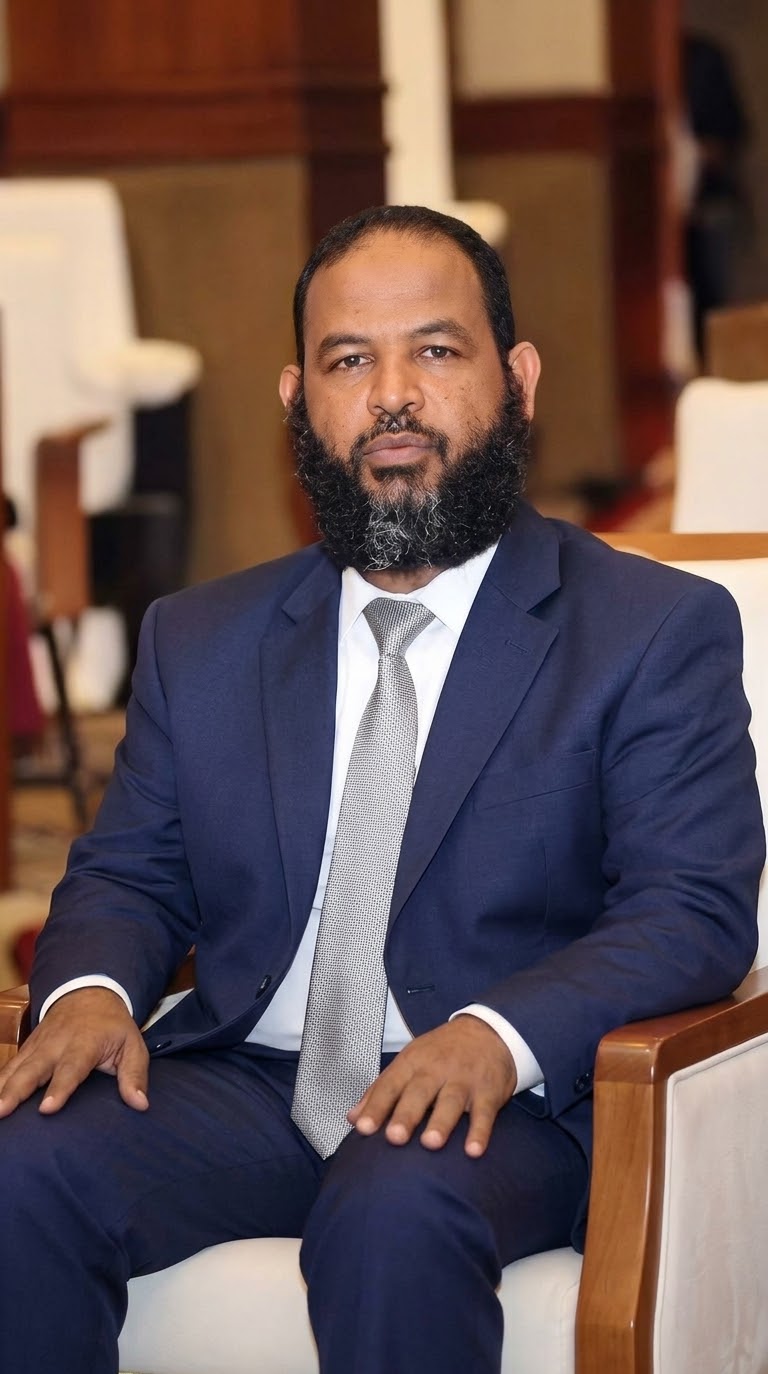
From Medical Research to the Advancement of Specialized Healthcare: A Scientific Career Bridging Knowledge and Community Service Gedaref – Sudanow Professor Saeed Mohamed Omar has achieved a notable scientific milestone by being included among the world’s top 2% of scientists for 2025–2026 in Clinical Medicine, under the General and Internal Medicine subfield,...
More-
25 October, 2026
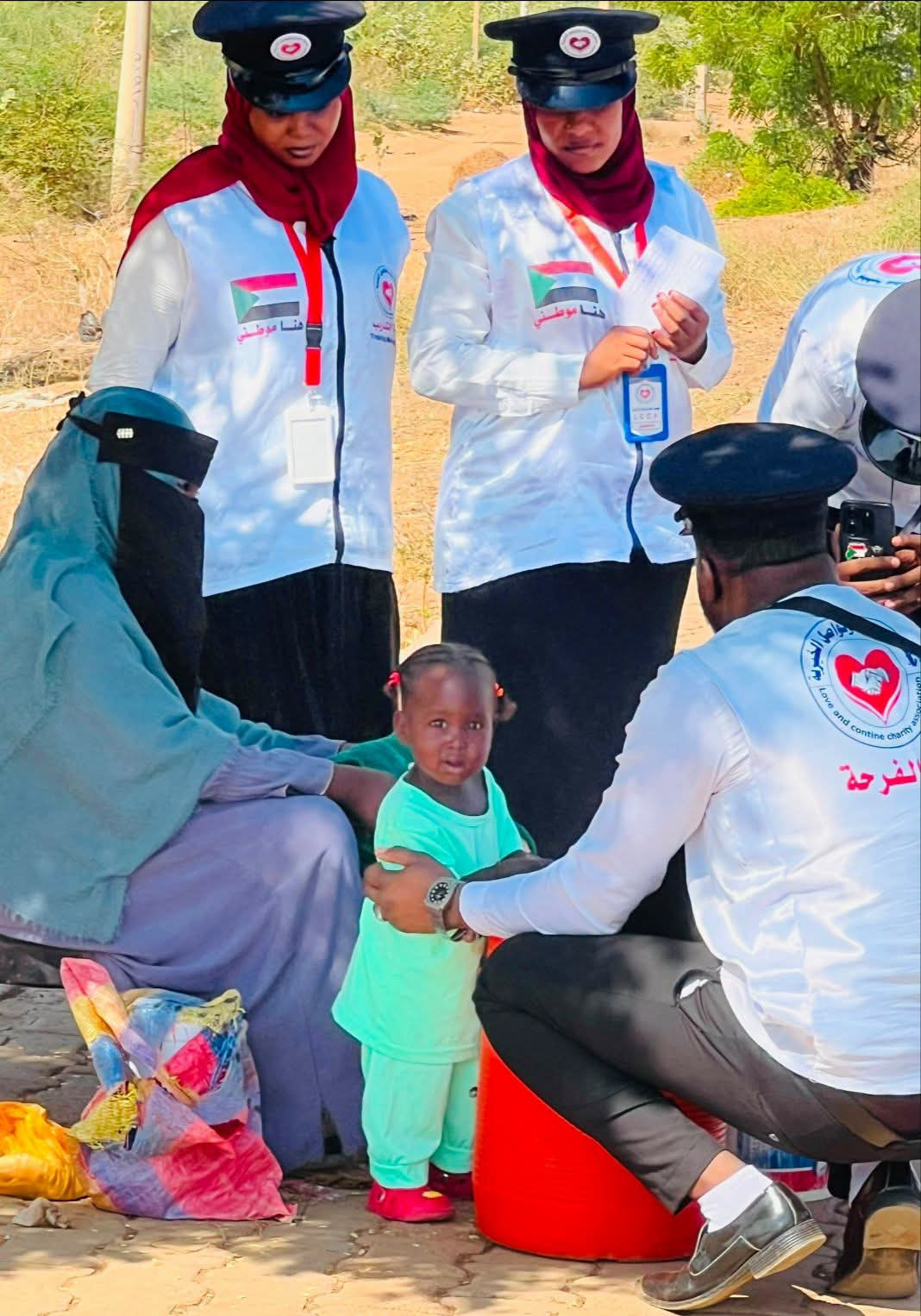
Tales from the Battlefield “Rest Tonight, Mum”: A Compassionate Gesture That Moved Social Media and Wiped Away a Strugg
A humanitarian initiative goes beyond providing assistance to help build hope Dr Sarah: The war has driven mothers into the markets in search of a livelihood. A video shared on social media has touched the hearts of users, capturing a moving act of kindness by young volunteers from the “Rest Tonight, Mum” initiative. The group reached out to a Sudanese woman displaced from Darfur who struggles to support her family...

Contact Us

Address: Sudan News Agency (SUNA) Building, Jamhoria Street, Khartoum - Sudan
Mobile:+249 909220011 / +249 912307547