



Facts about Darfur Crisis
03 December, 2011
Khartoum, ( sudanow. info )- No doubt that Darfur’s geographical and demographical facts have greatly contributed to the Darfur crisis as the region’s three states extend between longitude 22- 27 east and latitudes 10 and 16 north with a total area of around 549,000 kilometers (approximately the total area of France). The region shares political borders with Libya to the north, Chad to the west, Central Africa Republic to the southeast and South Sudan to the south. The region’s population amounts to around 6 million people according to the 1993 population census.
Darfur region enjoys multiple climates due to diversified natural environment as it enjoys semi-desert climate to the north, rich savanna to the south and Mediterranean climate at Jabel Marra chains at the  center and southeast of the region.
Darfur region is divided into Dars (home areas) dwelled by specific ethnic groups. Each home area forms the social, political and cultural identity of the specific ethnic group.
The region’s population is divided into two ethnic groups, one of African origins and the other of Arab origins, but there is a clear harmony between these two groups due to marital relations that took place hundreds of years ago. Islam and Arabic language were also two common factors that have contributed to uniting the people of Darfur. The only difference between these two groups is the means of living where the African tribes depend on agriculture as a main occupation while the Arab tribes perform grazing as they own cattle such as the Bagarra tribe at the southern part of the region whose members raise cows and the Rizaighat tribe at the norther parts of the region whose members raise camels. However, recently most of the Darfur tribes started to depend in their living on both agriculture and grazing.
The region is traditionally divided into three major dars or home areas where in the north there is Dar Zaghawa (home area of Zaghawa tribe), at the center there is Dar Fur (home area of Fur tribe) and in the south there is Dar Rizaighat (home area of Rizaighat tribe). There are alos other home areas for other tribes and population groups in the region such as Dar Masaleet, Dar Tama, Dar Birgid etc…
There were many reasons behind the Darfur conflict, but many researchers summed them up in the following:
Tribal conflicts due to scarcity of resources (environment deterioration).
Tribal conflicts over lands
Disputes due to different social reasons (cultural- ethnic- arm robbery)
Conflicts due to deterioration of security situations in neighboring countries (Libyan-Chadian war, Chadian-Chadian war, and the conflict in Central Africa Republic)
Hatred: Some elements tended to disseminate hatred and racism together with exclusion of the other
Dissolve of the native administration
Ambitions for power and wealth by some rising forces youths who are experiencing a state of instability and unemployment
Absence of religious prevention due to the increasing rates of illiteracy, ignorance and educational drop-out
Political conflicts (Darfur rebel movements)
 Since the war broke out in Darfur in 2003, the Sudanese government has announced that it was a dispute over the scarce water and pasture resources between the herdsmen and the farmers mainly due to environment deterioration and the drought which hit the region since the 1980s of last century.
After four years of debate, a report, prepared by the United Nations Environment Organization (UNEO) concluded that the hope was weak to achieve peace in Darfur unless the Sudanese government tackles the impacts of the climate changes and the damages of the environment in the region.
The report said the conflict in Darfur was causing spread of desert which further complicates the ethnic sensitivity. The report also said the drought was among the main reasons behind the conflict as it pushed the Darfur population of herdsmen and farmers to fight one another over the scarce water resources.
Additionally, the UN Secretary General Ban Ki-moon, in a report published by Washington Post in June 2007, said that the climate change bears part of the responsibility behind the eruption of the conflict in Darfur.
The UN report stated that the competition over oil, gas, water and wood resources and land were responsible of the continuation of the fighting, not only in Darfur but other regions in Sudan.
The report further stated that the environment deterioration which is resulting from the diminishing in
 these resources constituted one of the major reasons behind the disputes in Sudan besides the economic, political and social factors.
The international organization noted that desertification in Sudan was spreading with a rate of a hundred kilometer each year during the past 40 years, adding that the country has lost around 2 percent of its total forests in the past 15 years.
The United Nations Environment Programme (UNEP) distributed the report of environmental evaluation after the end of the conflict in Sudan on June 2007. It was the most successful evaluation process that the UNEP has ever conducted after the end of the conflict in Sudan. As a follow up process, the UNEP asked for implementation of an environmental programme at the national level in Darfur and south Sudan.
The programme tended to build the capacity of the national authorities and the UN personnel on using the natural resources in a sustainable manner, reforming the areas which suffer from environment deterioration and including the environment concerns and risk reduction procedures in the rehabilitation programs.
The Darfur crisis developed into an unusual pattern, which led to complications and consequences that further complicated the efforts aiming at finding solutions. The most prominent of these consequences included the following: -
Internally Displaced Persons (IDPs) and refugees: No cases of displacement and refuge due to traditional tribal disputes were monitored in the past, but there was displacement due to the waves of drought and desertification which hit the region in 1986. However, the displacement and refuge this time was considered the worst that Darfur has ever experienced where around 1.2 million people have displaced internally and around 400000 others left the country as refugees across the borders. This was the biggest barrier before the efforts of realizing peace in Darfur, particularly that the long stay of these IDPs and refugees at the camps led to foreign interventions, matter which resulted in intensive presence of foreign organizations inside the IDP camps as at the beginning the IDPs and refugees refused to deal with the national authorities and organizations.
Hatred and Racism: Due to the development of the conflict in Darfur, hatred and racism together with the attempts to exclude the other emerged as one of the biggest consequences of the crisis. These concepts have spread dreadfully, supported, particularly by the foreign organizations which were working to consolidate the concept of racial affiliation and depict the conflict as if it was a dispute between racial groups each trying to exclude the other in a systematic manner.
Ambitions and self-gains: The concept of self-gains has spread among wide sectors in Darfur with the aim to obtain a share in power or wealth, matter which made of the Darfur crisis a center that attracts whoever wants to achieve personal ambitions in the shortest possible time. This led to emergence of many armed movements which then fragmented into more than 30 movements. Additionally, the opportunistic leaders work inside to achieve their own interests without paying any attention to the suffering of the citizens in Darfur.
Foreign organizations: There are over 150 foreign organizations operating in Darfur. They spend over 500 million US Dollars a year in addition to the United Nations- African Union Mission in Darfur (UNAMID) which needs around 150 million Dollars a month. These organizations employ more than 50,000 employees, 8000 of them are foreign. These huge funds are expended in forms of administrative expenses that exceed %60 where the IDPs and refugees do not benefit but from small sums of these funds. These organizations work according to special agenda associated with the Western countries or personal interests, which is another problem.
Apart from the political disputes, Darfur has a great history of co-existence that dates back
 to the 1920s of last century. Other reasons of disputes were casual, ecological or cultural. Before the independence, the policy of closed areas was the main reason behind the marginalization at some areas followed by disputes where over 30 disputes have been registered among the different Darfur tribes since 1934. However, those disputes used to be resolved through simple mechanisms based on the Darfuri traditions, customs and norms. Those mechanisms usually manage to resolve the conflict. It was a prevailing culture that has been standing for years.
However, the development in the forms and reasons of conflicts led to complicating the native mechanisms, matter which led to the development of the Darfur dispute into a conflict involving local and foreign agenda for those who are striving for wealth or power or both.
State’s efforts to resolve the crisis:
To resolve the tribal conflicts and achieve security in Darfur, a conference for reconciliation among the Darfur tribes was held during the period 1932- 1997. It is observed that during the 1980s and 1990s, the tribal disputes in Darfur were emerging a rapid manner due to the drought and desertification which hit the region, which forced the tribes to move southwards to the regions of the agricultural tribes. That movement caused new tribes to get involved in the dispute which usually breaks up between the herdsmen over pasture or between the herdsmen and the farmers, particularly at the home area of Barti tribe in north Darfur.
It is to be noted that after 1997, more than 15 reconciliation conferences were held, focusing on South Darfur state such as Nyala reconciliation conference in 2005 between the Arab and Fur tribes, Um Ziaifa conference between Tarjam and Rizaighat Ambbala tribes in 2007, Nyala conference between Zaghawa and Zaghawa Um Kamalty tribes in 2007 in addition to other conferences during the period 2005- 2009.
It can be observed from the map of the tribal conflicts that the major tribes of the regions are the ones involved in the conflict, but there were many other tribes that have not been part of this conflict for different reasons.
The government has adopted a serious dialogue to achieve the country’s upper interests and fulfill the aspirations of the Sudanese nation through the realization of peace at all its parts. Consequently external rounds of dialogue were made represented in meetings of Abache, N’djamena 1 and N’djamena 2, Addis Ababa, the Libyan mediation and the Abuja talks which were culminated with the signing of the Abuja peace agreement, in addition to the African Union efforts to achieve ceasefire and mediate between the conflicting parties, which have greatly contributed to calming down the situations in Darfur.
The government’s efforts to improve the security and humanitarian situations in the region have continued where it adopted many plans and initiatives to achieve peace and stability from within. In this respect, the government first convened El Fasher consultative conference followed by formation of a committee to pose security and sovereignty of the state. The government has also mobilized the official and popular leaderships together with the leaders of the native administration to restore the social fabric which was prevailing in Darfur.
.jpg)
The government further secured the villages and towns, provided health and education services for the people affected by the conflict and set up a comprehensive plan of many axis to rehabilitate what has been destroyed by war and achieve stability in the region.
The government has kept on exerting its efforts to improve the security and humanitarian situation through intensifying the police presence and dissemination of the judicial institutions to impose the sovereignty of the state and implement the rehabilitation projects to encourage voluntary return of the IDPs to their home areas with the aim to sustain peace.
In this regard, tens of model villages for voluntary return have been established via the Darfur rehabilitation project and the support of the donor states together with the Arab and Islamic countries which have contributed to enhancing the Darfur peace through the model villages and voluntary return programs.
Additionally, the international has expressed complete readiness to fund the development projects in Darfur and contribute to the big projects, particularly the roads, railways and infrastructure projects.
It has been embarked on establishment of 21 model villages for the voluntary return besides provision of a means of living so that the returnees would find something to depend on for their living when they return to their home areas.
In this connection, the Qatari Red Crescent has embarked on drilling 9 new water wells to provide clean water for 2750 families in localities and villages in West Darfur.
The Sudanese rural areas, particularly in the west and east, are suffering from scarcity of water,

Additionally, the establishment of the Libyan artificial river, which cost around 30 billion US Dollars, without Sudan’s permission, has drawn Sudan’s groundwater where the underground water level dropped from half meter near the surface to five meters at the rural areas in western Sudan, a problem that could erupt between Sudan and Libya when the thirst issue aggravates in western Sudan.
Meanwhile, Abuja Peace Agreement constituted a transition point on the course of the Darfur crisis because it has managed to achieve a great breakthrough in the interest of peace where the parties’ recognition of the Darfur issue and its fair rights in power and wealth sharing was a positive matter. However, the negative aspect in the agreement was the rejection of some armed movements to join it in the pretext that it was incomplete. The rejecting movements then worked to instigate other movements to stand against it. Additionally, the tribal nature of those movements has further complicated the matter and made it difficult to unit them to be addressed as one entity.
On May 31, 2011, the Darfur stakeholders conference was convened followed by the signing of the Doha Document for Peace in Darfur (DDPD) between the Sudanese government and the Liberation and Justice Movement (LJM) on July 14, 2011, which constituted an important step towards a lasting peace in Darfur.
Despite all the above, the United Nation Security Council (UNSC) sees that the conflict in any area in Sudan affects the other areas, and urges for close coordination among the UN missions in the region including the United Nations- African Union Mission in Sudan (UNAMID), the United Nations Interim Security Force for Abyei (UNISFA) and the United Nations Mission in South Sudan (UNMISS).
The UN Secretary General asks for effective cooperation among the missions where he made UNAMID mandate under Chapter seven of the UN Charter which grants the mission the right to use force.
The UNSC, via its resolution number 2003, issued on July 27, 2011, urges all the parties to the conflict, including all the armed movements, to immediately and without pre-conditions exert their utmost to reach a permanent ceasefire and achieve a peaceful settlement based on the Doha Document for Peace in Darfur in a manner that contributes to the realization of lasting peace in the region.
The UNSC, in this respect, noted to a possible complementary political process to be led by the African Union and the United Nations, and urged the Sudan government and the armed movements to contribute to creating the necessary conducive atmosphere for conducting a political process in Darfur that allows participation of all the concerned parties in Darfur in an open and constructive dialogue.
The council, as well, noted that despite some positive developments in the political process, some important elements have not yet achieved to provide the atmosphere conducive to conduct the political process in Darfur.
Such elements, according to the council, are generally represented in respecting the civil and political rights of the participants in a manner that enables them to express their views without fear from punishment, freedom of expression and assembly in a way that allows conduct of open consultations, freedom of movement for the participants and members of the hybrid operation, relative participation of the Darfur people, non-subjection to harassment and arrest and non-intervention of Sudan government and the armed movements.
The Sudan Liberation Army (SLA)/ Abdul-Wahid Nur, for instance, refused to sign the Abuja agreement and defected from the movement because of the Haskanita conference in 2005, just few months before the signing of the Abuja Peace Agreement when Arko Minni Minnawi was appointed as a new SLA leader to sign the agreement. This incident reflected the competition between the Zaghawa tribe, represented by Minnawi and Fur tribe represented by Abdul-Wahid Nur who is supported by a group of IDPs at the camps, most of them from his tribe.
The second transition point on the course of the Darfur crisis is represented in the decision of the prosecutor of the International Criminal Court (ICC) Luis Moreno Ocampo who issued an arrest warrant against the Sudanese President Field Marshal Omer Al-Bashir on March 4, 2009 for war crimes against the citizens of Darfur.
The decision of the ICC prosecutor pushed the Sudan government to reconsider cooperation with the ICC, particularly which the government regards the decision as a flagrant intervention in Sudan’s affairs and touches the emblem of the national sovereignty.
The armed movements, on the other hand, utilized the decision and declared their readiness to implement and stand against the government, matter which increased the tension and weakened the opportunities of peace.
This has changed the course and trends of the crisis into various dimensions, including: -
First: the issue of IDPs and refugees, i.e. the humanitarian issue
Second: the issue of the movements and their different agenda and how to unite them
Third: the issue of the ICC and its consequences.
Forth: the conflict with neighbor Chad. The conflict with Chad represents part of a package of obstacles on the way of resolving the Darfur crisis because the two countries share joint borders that extend for 1600 kilometers. Additionally, more than ten tribes live on the contact areas between the two countries. Both Sudan and Chad do not have ambitions in one another and both have no problems on their joint borders. In fact, both countries are victims of the international interests which made them enemies.
Fifth: the issue of the Sudanese opposition parties: The Sudanese opposition parties and the Sudan People’s Liberation Movement (SPLM) have a very strong effect on the events in Darfur where they invest the conflict to serve their traditional dispute with the government. Consequently, the government accuses some of them, such as the Popular Congress Party, of having direct role in the conflict. As for the SPLM, it exploits the Darfur crisis to achieve its own goals where it has called for Juba conference to unify the opposition parties.
Here below we will cast light on some important initiatives which have presented objective proposals on the nature of the issues of difference which we have mentioned earlier. These include: -
Darfur Peace Group: The Peace Researches Institute of the University of Khartoum. This group is formed of the Darfur activists in the Darfur peace issue. Most of them are well-informed politicians, academicians and journalists. The efforts of these group is coordinated by Director of the institute Dr. Al-Tayeb Haj Attiya and some researchers in the field from the University of Khartoum. It is to be noted here that the group named itself Heidelberg Group after the German city of Heidelberg which hosted the meetings of the group’s committee in 2008 and 2009 (Heidelberg 1 and Heidelberg 2)
The group of Road to Darfur Peace: This group greatly is similar, in a great extend, to the first group where most of its members are actually from the first group. It brings together well-informed Darfurians and some political leaders in the opposition parties and the government. This group presented a document known as Darfur Peace Road-map.
Initiative of People of Allah: This initiative is patronized by Sheikh Mussa Abdullah Husein, Khalifa of Shareef Ibrahim Salih al-Husseini, one of the most prominent members of Al-Tiganiya Suffi sect in Africa. The group believes that the reason behind failure of the previous initiative was that they did not address the sentiment of the Darfur people, i.e. they (the initiatives) have neglected the spiritual and religious aspect.
Initiative of the People of Sudan: This initiative is the outcome of the previous initiatives. It is patronized by the President of the Republic. It was proposed in November 2008 and brought together more than 200 prominent personalities from all parts of Sudan. They met at the premises of Kenana Sugar Company in the White Nile State. It also brought together military commanders, political, religious and cultural leaders as well as national figures who were carefully selected in the presence of government and opposition leaders. This initiative came due to the government’s feeling that there was a gap on the course of the Darfur crisis and that it had to take the initiative and declare its sincere intention to resolve the iss as it believed that the Sudanese people are the most capable to resolve their issues by themselves.
African Union High-level Implementation Panel on Sudan (AUHIP), LED BY Thabo Mbeki: This panel was formed by the African Union Peace and Security Council (AUPSC) with the support of the international community, and is headed by Thabo Mbeki, former President of South Africa and membership of five others. The panel tended to collect ideas and fact to identify the problem and its root causes and suggest possible solutions. The panel, during a whole year, met most of the government and armed movements’ representatives together with the different components of the Darfur region.
Doha Declaration: During November 16-21, 2009, the Qatari capital of Doha hosted a consultative meeting at an invitation by the joint UN-AU representative Djibril Bassole and the Qatari government. The meeting came in response to a proposal in Mbeki’s report on importance of involving the Darfur civil community in the coming negotiations. 214 persons representing the different Darfur components in addition to the representatives of the government and the armed movements were invited to participate in the meeting in Doha to address the issues presented for discussion in the meeting. The issues included the security arrangements, disarmament, power and wealth sharing, power-sharing arrangements, lands, pastoral passages, justice, reconciliations, voluntary return and role of the civil community in the peace process. The most important feature which characterized this initiative was the fact that it formed the viewpoint of the silent majority where it has been proved that the Darfur issue could not be resolved within the talks between the government and the armed movements alone because the reality affirmed that and the evidence was the Abuja agreement which failed to resolve the conflict because its signatory groups were not representing the majority of the Darfur people. In fact, the Darfur people were looking for a wider framework through wich they could participate in resolving their issues. This could not be achieved through the gate of the armed movements which represent only %1 of the Darfur population. Therefore, the Doha initiative opened the closed doors for the Darfur people to express their viewpoint of the majority in the issue of stability, peace and development.
Peace opportunities:
The peace opportunities are represented in the following: -
The Sufi background and high religious spirit within the Darfur tribes
Existence of firm traditions, customs and norms
The deeply-rooted social fabric of the Darfur people
The tribal terms and previous agreements
The Darfur Peace Agreement for 2006.
The Initiatives of friendly countries (Qatar- Libya- Egypt) and the supportive international stances
The real desire of the Darfur people and the IDPs and refugees communities to achieve comprehensive peace.
Peace threats:
The peace threats are represented in the following: -
The security situation constitutes the biggest threat to the peace process in Darfur under non-signing of a ceasefire agreement.
IDPs and refugees camps in Sudan and Chad
Spread of arms
Illegal possession of others’ lands
Issues of pastoral passages, illegal grazing and unorganized agriculture
Spread of ignorance and illiteracy, educational drop-out and imported social phenomena among youth, women and children
The conflict with neighbor Chad and the tension in the relations with Central Africa Republic
The international ambitions and foreign interventions which feed the ciaos and wars to achieve their colonialist interests
The Book of Western Ambitions and Exaggeration of the Darfur Crisis, for its author Dr. Raqib Al-Sijani, stated that the Darfur crisis has received a wide media echo due to the strategic backgrounds and the Western ambitions and as a result over 17 million news stories were monitored within 20 months during 2004 and 2005 in four news agencies including the AFP, the Associated Press (AP), Reuters and the BBC where only %5 of these stories were moderate in their tackling of the issue.
When a question about Darfur conflict was fed in the Google search, it turned to be that the best answer received by 2896 visitors of the website was on 14:04:02 06?01?2010.
The answer stated that the intensive western intervention in the region changes many calculations and strongly pushes towards the idea of separation to achieve serious strategic interests. These have started to deal very clearly with the rebel leaders in Darfur to push hem to separation so that a state loyal to the western and Zionist entities would be established where Israel has allotted 5 million US Dollars to support the Darfur refugees and opened the door before the charitable organizations in Israel to participate. Israel has also declared its readiness to purchase medicines and water analyses equipment worth of 800.000 Dollars to be collected from some Zionist companies.
Among other important evidences is the clear and wide international concern with the Darfur issue and its consequences despite the fact that it was originally an internal issue that was traditionally regarded as it was not subject to external interventions. Therefore, the wide international intervention in the Darfur issue reflected a backtracking from the principle of non-intervention in the internal affairs of countries and proved the saying which prevailed after the cold war that the ethnic conflicts have dissolved to a greater extent that traditional difference between what is an internal affair that others should not intervene in and what is an international affair that countries should deal with and intervene in under the pretext that it poses a threat to the international peace and security.
No matter what the matter is, the international concern with the Darfur issue has been represented in many resolutions issued by the UNSC in a very short time until the matter appeared as if the council has nothing other than the Darfur issue to confront. The truth is that this international stance did not emanate from nothing but it was pushed by the United States to adopt it. All these developments in the Darfur issue were propelled by the US policy which tended to adopt the principle of carrot and stick in dealing with the Sudan government in infeasible attempts to steer the course of the Sudanese conflict towards the American prospects which clearly tend to control Sudan’s resources, kick China out and replace the system in Sudan with one that conforms with Washington’s security and economic interests.
However, America has not been clear in terms of the mechanisms through which it is planning to achieve those goals. For instance, what exactly the target situation in Darfur, particularly after many US stances that appeared to many observers as unclear such as the huge pressure just to accomplish the signing of the Abuja agreement and then immediately leave it to collapse. Not to mention its work to weaken it, and now America wants to follow the Doha Document for Peace in Darfur with an initiative for a meeting in Washington!!.
The exaggerative concern with Darfur has not come from the US Administration alone but also from tens of civil society organizations inside America.
The development of the conflict in Darfur was accompanied by emergence of an alliance that brought together over 175 American civil society organizations where its founders named it (Save Darfur Coalition). The members of this coalition meet to hold the Sudanese government responsible of what is going on in Darfur. They also accuse the government of adopting a policy of genocide in facing the sons of the region who are of African origins. Therefore, the coalition calls on the international community to use all means to overthrow the government.
It is to be noted that most of the organizations in this coalition are Jewish organizations. Organizations of the Christian Right and the so-called the new conservatives are also members of this coalition.
Therefore, it is natural that the head of this coalition is the Jewish Jerry Fowler, Director of the so-called Zionist Committee of Conscious.
The coalition has managed to organize campaigns inside American universities through which T-Shirts bearing the logo of the coalition were sold. It also marketed a video game named “Save Darfur”.
The coalition further managed to attract some American organizations active in the field of slavery control and convinced them that the situation in Darfur is enslavement for the African tribes by the Arabs.
Save Darfur Coalition meanwhile has organized several protest in American cities with the aim to spread its instigative program against the government. For instance, the coalition on April 30, 2006, staged a demonstration at the center of the US capital Washington in protest against what the protestors called genocide in Sudan.
In this respect, Executive Director of the American-Jewish World Service in New York and member of the coalition Ruth Messenger claimed that “we protest today to show Sudanese dictator General Omer Al-Bashir that we hold him personally accountable for this worsening three-year genocide, and that we will keep pressure on him, and on the international community until it ends”.
In fact this obvious influence of the coalition has not confined to the US and western public opinion in general, but extended to cover the American political institutions themselves. For instance, top members of the coalition were summoned by some Congress committees to give their testimony several times. On April 11, 2007, for example, Lawrence Rosen stood before the US Senate Committee on Foreign Relations which belongs to the US Congress where he said that the diplomatic efforts have failed to deal with the government of Al-Bashir who kept on defying the international community and attacking the Darfurians with his armies and war planes and through the Janjawid.
On June 7, 2007, Rosen testified before the United States House Committee on Oversight and Government Reform, an affiliate of the US House Committee on National Security and Foreign Affairs, claiming that the Save Darfur Coalition was working in cooperation with other organizations and concerned citizens to create a rejecting feeling for the issue of genocide in Darfur and identify procedures that should be adopted to end it.
It can be observed that Rosen in his testimony used obvious contradictive terms to exaggerate Al-Bashir government’s responsibility and instigate further enmity to it. Among such contradictive accounts his claim that the victims of the conflict in Darfur amounted to 400,000 people, a figure that no study ever indicated, not even the studies issued by organizations known for their flagrant enmity to Sudan government. Additionally his use of the term “killed persons” indicates to the receiver as if the concerned persons were victims of direct military operations at a time when great number of the people died in Darfur due to other reasons such as spread of diseases and malnutrition according to most of the sources, top of them the World Health Organization (WHO) despite its clear side-taking against the government of President Al-Bashir.
David Hoile, Director of the European- Sudanese Public Affairs Council (ESPAC), on his part, accused some media organs and western pressure groups of publishing wrong information and baseless claims ABOUT Sudan and Darfur and pressing on their governments to take specific stances.
He stressed the importance of putting pressure on the American Lobby so that the European-Sudanese relations would be good, pointing out that at the eime when the European countries spend millions of Dollars to develop these relations, the US pressure groups spend more than 400 million Dollars with the aim to circulate and publish inaccurate information about Sudan’s issues and the Darfur crisis.
Hoile further said that America was trying to influence some European countries to press ahead with certain trends regarding their relations with Sudan, adding that there were pressure groups in America and Europe allotting a budget worth of 700 million Dollars for media of the lobby to publish untrue information about Sudan, particularly in Darfur.
He noted that the Darfur issue could be resolved if the Darfur people sit to do that themselves.
In the meantime, Prof. Charlie St. Bru, the famous French historian and political analyst and Director of Geopolitical Studies Institute in Paris, wrote an article about the geopolitics of Sudan, saying that though Darfur is a remote Bedouin and urban region, but it standing balance has been upset due to the high population growth rate, desertification and development of life pattern.
He explained that the urban citizens who used to concern with agriculture only have started to raise cattle and therefore they wanted to prevent the Bedouins from grazing over their lands.
He pointed to other factors that have combined to further complicate the conflict in the region including the discovery of oil which prompted the ambitions of some big countries, saying that it is observed at the same time that some of the big countries, particularly the English language speaking ones, have endeared themselves to the Darfur rebels and supported them with the aim to make use of the chaos and take control of the region’s oil resources.
He also reviewed the dispute over oil in the region, saying that America was seeking diversify its oil supply sources through taking control of the rich African oil reserve.
He went on saying that when America did not like the cooperation between Sudan and China in the field of petroleum, adding that America therefore started to impose its influence in Chad via entry of great US oil companies in the Chadian oil line in 2000.
He also reviewed the reasons behind the Darfur conflict, saying that most of the victims died because of lack of food and health care in addition to the displacement during which the people fled from the battles or the armed militias which used to loot them from all directions.
The author, meanwhile, said the Sudanese government established a court in 2005 to try the perpetrators of the crimes in Darfur where he cited testimonies of neutral witness who reaffirmed that the conflict in Darfur was not an ethnic conflict.
In this respect, he cited the testimony of Mark Levering, an expert in the Sudanese affairs, which was posted on the www.afrik.comwebsite in which he described the origin of the conflict in Darfur and affirmed that the was no genocide there.
He also cited a statement for Thierry Allafort-Duverger, head of Medicines Sans Frontiers (MSF) emergency desk, to the French Le Figaro newspaper in which he said according reality and analysis, there was no genocide in Darfur, explaining that the people misuse the term of genocide besides a misleading media that harms the voluntary work.
Photo of the Week
From Medical Research to the Advancement of Specialized Healthcare: A Scientific Career Bridging Knowledge and Community Service Gedaref – Sudanow Professor Saeed Mohamed Omar has achieved a notable scientific milestone by being included among the world’s top 2% of scientists for 2025–2026 in Clinical Medicine, under the General and Internal Medicine subfield,...
More-
25 October, 2026
Tales from the Battlefield “Rest Tonight, Mum”: A Compassionate Gesture That Moved Social Media and Wiped Away a Strugg
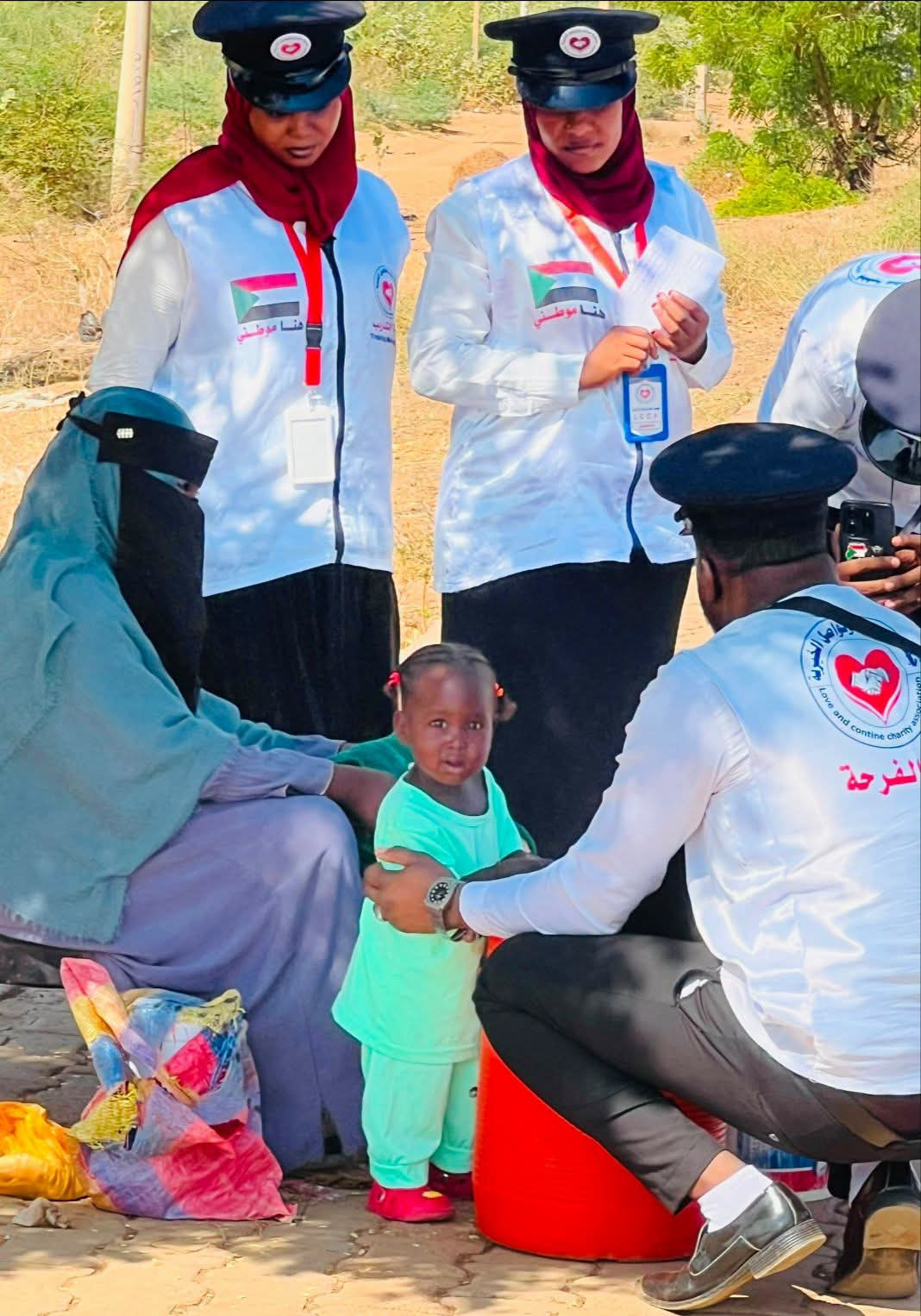
A humanitarian initiative goes beyond providing assistance to help build hope Dr Sarah: The war has driven mothers into the markets in search of a livelihood. A video shared on social media has touched the hearts of users, capturing a moving act of kindness by young volunteers from the “Rest Tonight, Mum” initiative. The group reached out to a Sudanese woman displaced from Darfur who struggles to support her family...

Contact Us

Address: Sudan News Agency (SUNA) Building, Jamhoria Street, Khartoum - Sudan
Mobile:+249 909220011 / +249 912307547