

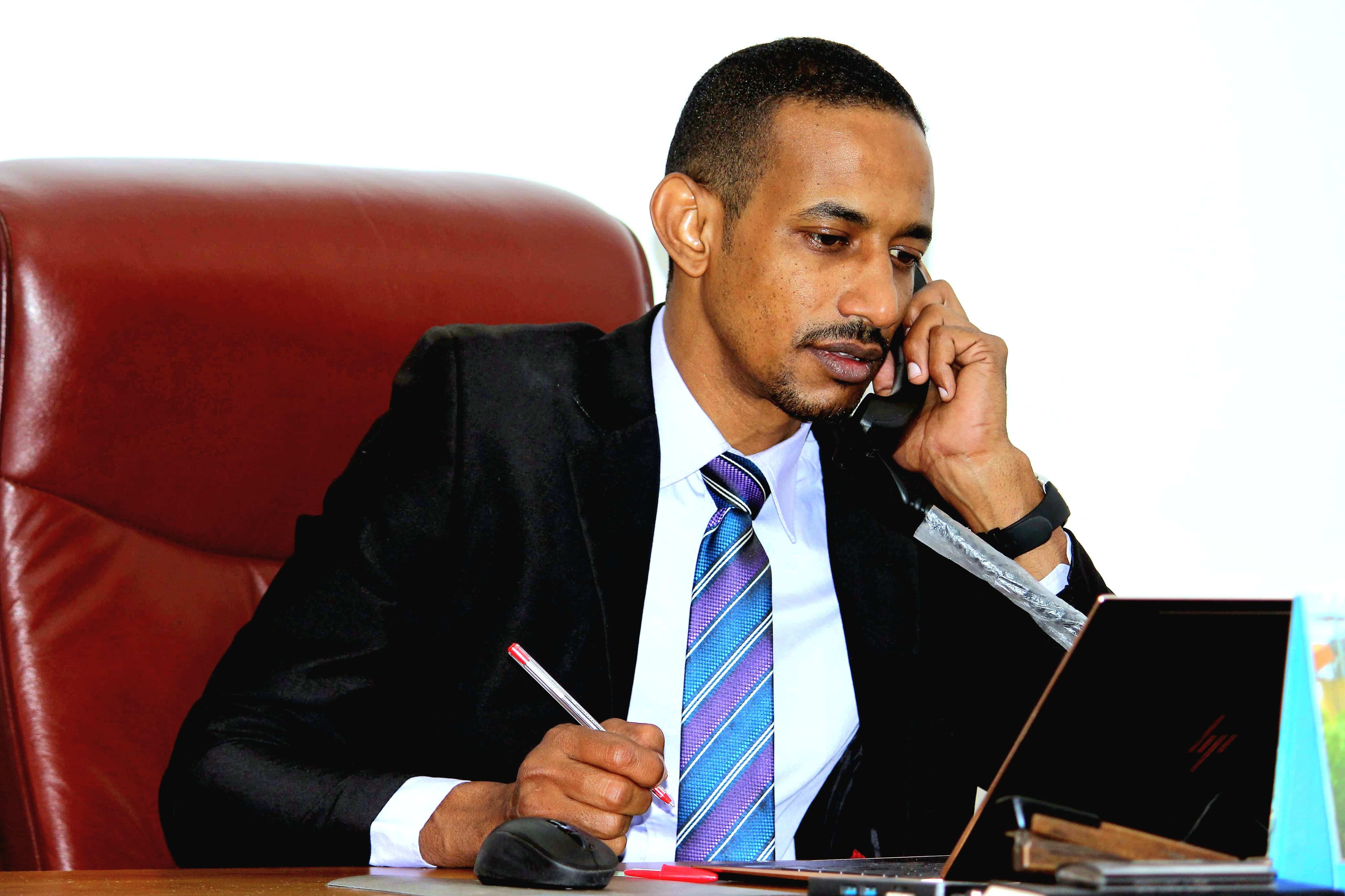


“I know the Sudanese prefer wheat to rice but cultivation of the latter fetches considerable proceeds of foreign exchange,” Japanese Ambassador
23 December, 2012
KHARTOUM (Sudanow)—The Sudanese-Japanese diplomatic relations are old and renewable, starting in 1956, the year in which the Sudan gained independence. Bilateral cooperation and technical assistance by Japan to the Sudan dominated the past decades, particularly in the industrial and agricultural spheres, including the modern technological benefits the Sudan has gained from Japan which is leading in these fields.
Following a delightful celebration by the Japanese Embassy in Khartoum marking the birthday of the Emperor of Japan and attended by senior Sudanese government officials, members of the diplomatic corps and numerous Sudanese nationals of intimate friendship with Japan, HE the Ambassador of Japan to Khartoum, Mr. Ryoichi Horie, dwelt at length on the economic, social and political ties linking his country to the Sudan in the following dialogue:
At the beginning of the dialogue, HE the Ambassador said it is not exactly known where and when rice grew for the first time but it is likely that it grew as a wild plant thousands of years ago in Southeast Asia and the natives collected and ate it. Archeologists found signs showing that people used to grow rice since 5000 BC. HE the Ambassador concluded his opening remarks by saying that rice stands as the staple food to the majority of peoples of Asia.
SUDANOW: YE, Rice is regarded as one of the world’s most important food crops and more than half of the world population depend on it as the main part of their meals. Could you brief us on the Japan-funded project of cultivation of rice in the open, rather than underneath water?
HE: We have a pilot experiment of growing this kind of rice in the Gezira State. It does not need much water towards which people are not enthusiastic for fear of mosquito multiplication in the areas of cultivation. It was grown in wide areas in the Gezira Scheme and the Gezira State Wali (Governor), Al-Zubair Beshir Taha, has communicated to me his State’s full cooperation in implementing a hopefully successful project of cultivation of this crop on suitable lands. I know the Sudanese people prefer wheat to rice but this crop, if exported, can fetch a lot of hard currencies. I have participated with Professor Taha in mechanized harvest operations of rice that was grown on four feddans in Village 44 in the Rahad Agricultural Scheme. The project was in the framework of cooperation with the Japanese International Cooperation Agency (JICA) under which 386 feddans were cultivated with rice in different regions, including Wad Al-Haddad in southern Gezira on 38 feddans, Al-Housh on 46 feddans, in central Gezira on 57 feddans in Wad Ballal and Fadasy, Giraigreeb on 34 feddans, Gouz Al-Rihaid on 57 feddans, Mahalah, Warraq and Wad Al-Naem on 57 feddans and on five feddans each in Al-Hilaliyah, Zangahah and Karkouj in northern Gezira.

The harvest operations were highly promising as the production is expected to reach 3 tons per feddan and the five states –Gedaref, Gezira, Sennar the Whit Nile and the River Nile- which have introduced the rice cultivation are expected to make the Sudan a competitor in rice production world-wise. The annual global production is currently 19 billion tons considerable quantities of which are consumed by China in addition to Saudi Arabia, Iraq and the United Arab Emirates. After the rice production is expanded in the Sudan, the produce can be exported to Ethiopia and South Sudan. The Government of Japan provides assistance to those Sudanese rice-producing states of which the Gezira is the most important one in crop production.
Q: YE, The Sudan possess rich and diverse natural resources while Japan is an advanced industrialized country with a highly robust economy. Which fields of bilateral cooperation that can be tapped to serve the common interests?
A: To begin with, I must say that the two countries have been maintaining long-standing deep-rooted ties of friendship and cooperation. Japan regards the Sudan as one of the important states for achieving peace and stability in Africa and the world at large as the country possess vast fertile lands s well as human and natural resources. Since my arrival in Sudan, I have signed with the Ministry of Finance a number of grants in the fields of water supply and agriculture. I believe upgrading bilateral cooperation between the two countries is a common responsibility of all of us and each one of us should, in his position, do his utmost effort for consolidation of the bonds of joint cooperation between our two peoples.
Q; YE, would you give us an idea of some of the aspects of cooperation between Japan and the Sudan in the field agriculture?
A: It is a general knowledge that the Sudan is rich in diverse natural resources. I have noticed this by myself during numerous tours I have made of a number of towns, villages and localities in the Gezira and Gedaref states. I have seen numerous expansive flat lands and multiple kinds of animal resources of camels, sheep and cattle. I have also seen vast fields of sorghum and wheat in addition to visiting numerous agricultural projects. I have tasted the excellent gum Arabic which is universally recognized as being of a high quality. We have begun projects of cooperation in the agricultural sector by helping in irrigation and water supply.

Q: How about the technical cooperation in the spheres of training?
A: We strongly support the technical cooperation and training. In this connection, I participated last November in a ceremony for handing over the joint network center for vocational training in El Obeid, North Kordofan, along with North Kordofan Wali (Governor) Motasim Mirghani Zaki al-Dinn. The Government of Japan funded this project in the framework of the project of cooperation which is known as “Human Resources Development in Darfur and the Three Regions”. This project is aimed at improving the vocational training services in the southern and western parts of the Sudan and redressing the deficit in the regional support that in turn impairs the sustainable development system in the vocational training sector. The project is an important portion of the support provided by Japan for the human resources development in the Sudan. We are confident that the establishment of the vocational training network center in El Obeid would ease the strain and minimize unemployment and would positively contribute to meeting the job requirements in each of Darfur, North and South Kordofan and Blue Nile states. It is also a vivid example of the intimate ties of friendship between Japan and the Sudan. We hope we will offer in the near future the technical assistance to the training centers in each of South Kordofan and Blue Nile which will shortly be constructed in cooperation of the Government of the Sudan, the governments of those states and JICA office in Sudan.
Q: YE, How about the issue of investment between Japan and Sudan?
A: Honestly, the Sudan is rich not only in natural resources but also in human resources. I acknowledge the capacities of the Sudanese officials and the private sector and companies in Sudan, only let me tell them that investment and trade are a road of two directions and therefore, we have to reactivate the process of investment from Japan in the Sudan and from the Sudan in Japan. I am confident that the Sudan is a promising country, particularly in the field of agricultural investment, especially in gum Arabic because it is among the world’s best kinds. The Sudan also possesses tremendous natural resources that include aquatic life in the Red Sea and other resources. The Government and people of the Sudan are inclined towards trade and investment; they should not hesitate and we are quite willing to back them as we are always ready to support the process of development in the Sudan.
Q: What role is Japan playing or is planning to play for achieving peace and stability in the states of Sudan and South Sudan?
A; Japan is interested in establishing relations of cooperation with each of the Sudan and South Sudan and seriously works for achieving peace and stability between the neighbouring states. Member of Parliament and Deputy Foreign Minister Mrs. Kazuya Shimba during a visit she paid to Juba last week urged the South Sudanese officials to carry on with implementing the agreement they have recently concluded with the Sudanese officials in Addis Ababa. Our Government in Japan is determined to exert its maximum efforts for achieving durable relations of cooperation between the two neighbouring states.
Q: YE, Judging from the tour you have made of a number of Sudanese towns and villages, how do you view the Sudanese community?
A: The Sudanese people are remarkably generous and hospitable. I was warmly welcomed and amiably treated by all ordinary and simple Sudanese people and I was happy sharing with them their traditional food in their homes. They are truly kind people and they deserve every prosperity and welfare.
E N D
mas
Photo of the Week
From Medical Research to the Advancement of Specialized Healthcare: A Scientific Career Bridging Knowledge and Community Service Gedaref – Sudanow Professor Saeed Mohamed Omar has achieved a notable scientific milestone by being included among the world’s top 2% of scientists for 2025–2026 in Clinical Medicine, under the General and Internal Medicine subfield,...
More-

11 October, 2026
Stories from the Heart of the Battlefield On World Teachers’ Day: The Sudanese Teacher — Achievements Against All Odds
Teachers carried their chalk through the rubble and kept working — Resilience War closed schools, but examinations continued — A Mission Low salaries and mounting hardships — The Price of the Profession Khartoum (Sudanow) — Teachers around the world are marking World Teachers’ Day this week, an occasion that carries messages of appreciation and gratitude for those who carry the torch of knowledge...

Contact Us

Address: Sudan News Agency (SUNA) Building, Jamhoria Street, Khartoum - Sudan
Mobile:+249 909220011 / +249 912307547