


Fate of oil companies’ workers: unanswered question yet
29 June, 2011
Khartoum- (Sudanow) – Petroleum constitutes the common factor in the future of the economic relationship between north and south Sudan after the official announcement of the newly born south Sudan State on July 9, matter which pushed senior officials of the two sides to embark on intensive meetings to discuss the issue.
These moves included the recent meeting of the Sudanese Minister of Defense Gen. Abdul-Rahim Mohamed Hussein with the Minister for Affairs of Sudan People’s Liberation Army (SPLA) Gen. Nhial Deng Nhial in addition to the current ongoing meetings in the Ethiopian capital of Addis Ababa.
Additionally, the Sudanese Minister of Oil Dr. Lual Achuel, who is trustful among the southerners because of his positive statements regarding the north-south Sudan relations, has recently presented a report to the Sudanese National Assembly (parliament) on the fate of the oil companies and their workers after the separation.
He has reassured the northerners that there were blocks of high oil productivity in the northern states.
He reiterated that Foluj agreement which was reached on 6/12/2010 and which stipulated formation of a mechanism to protect the oil companies and workers would be valid after the separation to ensure continuation of oil production.
He acquainted the members of the parliament with stages of the oil exploration in nine new blocks; four of them are in the north (A-13-12-11-9-14-8) besides two joint blocks (C.A) one in the north and one in the south.
Regarding the blocks at development stages, the minister pointed to block 17 in the north, adding that there were four production blocks, two of them are joint blocks between north and south Sudan.
The minister said block 17 produces 5000 barrels a day in West Kordofan area where the government estimated the oil revenues for the period July- December 2011 with about 2994,4 million Dollars, the north’s share of it is about 823,72 million dollars and the south’s share is 2150, 37 million dollars.
The minister answered the questions of the members of the parliament which focused on the fate of the northern labor in the oil field in south Sudan and their rights together with the reason behind lack of focus on oil explorations in the north.
Additionally, some members criticized the oil companies for not establishing development projects for the local communities or employing the sons of the citizens at the areas of production, while some members mentioned marginalization in the new south.
Minister Achuel, responding to the questions of the members, reiterated that the future would be for one people in two states, calling for continuation of the good relations.
He further stressed the importance of ensuring the flow of the oil from the south to the north, matter which received reservations from the northern members.
However, he explained that the dialogue was still ongoing in the Ethiopian capital of Addis Ababa in this respect.
Member of the parliament Hassan Subahy, representative of Abyei constituency, meanwhile, said the Kanar oil field, which lies in the constituency, produces 30000 barrels a day and that its production would rise to 100000 barrels by end of this year, yet downplayed the size of development which would reflect on the citizens of the areas.
He described the future relationship between north and south Sudan in the oil field as “…………..”.
Member of the parliament and representative of Raja constituency in northern Bahral-Ghazal Ismail Hussein, on his part, said the fate of the oil companies and workers in the area was not clear and that no tangible results were reached regarding this matter.
He called for deepening the economic cooperation between the two states.
Deputy Chairman of the Economic Committee of the National Assembly Dr. Babikir Mohamed Toam, in the meantime, inquired about possibility of assimilating the northern labor in south Sudan as foreigners with contracts and about the fate of the Chinese and Malaysian companies.
The minister, in this respect, said that the number of the oil companies operating in the oil field amounted to 15 companies with 4489 workers, %90,8 of them Sudanese and %9,2 foreigners.
He added that the northerners constituted %95,1 of the total Sudanese workers in the oil field, while the southerners represented %4,9.
He went on to explained that there was only one oil company currently operating exclusively in south Sudan, TOTAL and partners at block (B), adding that 13 people are working in this company, five of them foreigners and the rest are Sudanese, 3 northerners and 5 southerners.
The Ministry of Oil has estimated the number of the companies which are operating exclusively in north Sudan at seven companies with 827 workers, %12, 1 of them foreigners and 587, 9 Sudanese, explaining that the northerners represented %98, 6 of the total number of the Sudanese working in these companies while the southerners represented %1,4.
According to the ministry, the number of the privilege blocks in Sudan amounted to around 15, 2 of them in the south, 8 in the north and 5 joint ones between north and south Sudan.
END
Photo of the Week
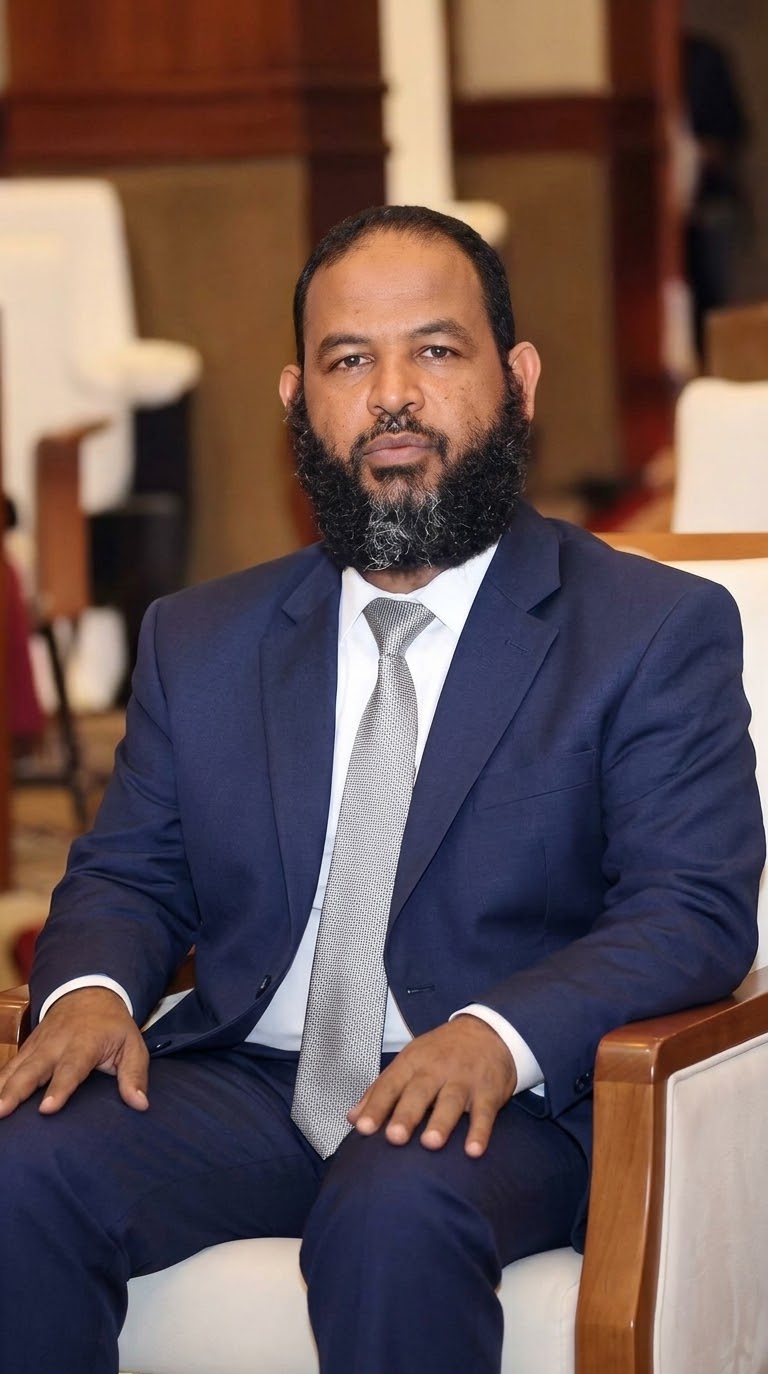
From Medical Research to the Advancement of Specialized Healthcare: A Scientific Career Bridging Knowledge and Community Service Gedaref – Sudanow Professor Saeed Mohamed Omar has achieved a notable scientific milestone by being included among the world’s top 2% of scientists for 2025–2026 in Clinical Medicine, under the General and Internal Medicine subfield,...
More-

11 October, 2026
Stories from the Heart of the Battlefield On World Teachers’ Day: The Sudanese Teacher — Achievements Against All Odds
Teachers carried their chalk through the rubble and kept working — Resilience War closed schools, but examinations continued — A Mission Low salaries and mounting hardships — The Price of the Profession Khartoum (Sudanow) — Teachers around the world are marking World Teachers’ Day this week, an occasion that carries messages of appreciation and gratitude for those who carry the torch of knowledge...

Contact Us

Address: Sudan News Agency (SUNA) Building, Jamhoria Street, Khartoum - Sudan
Mobile:+249 909220011 / +249 912307547