

Shangal Peaceful Farmers Forced to Take up Weapons to Get Food
03 June, 2015
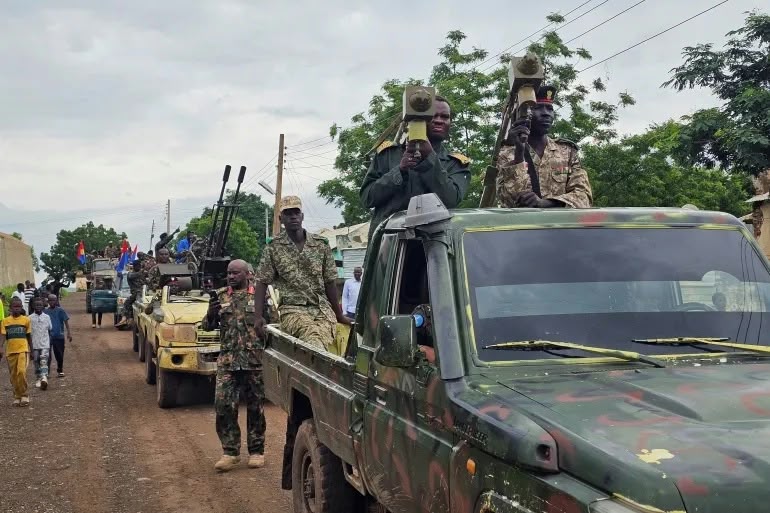
KHARTOUM (SUDANOW)—The civil war between the Sudan People's Liberation Movement – North (SPLM-N) and the government forces not only destroyed Shangal Village in West Kordofan but also forced the villagers to resort to acquiring weapons to secure their food instead of the farming activity which they inherited from their ancient ancestors.
Shangal Village, which is in West Kordofan State about 72 km away from the State's capital Al-Foulah, is one of the biggest villages in the western Nuba Mountains. It is considered the capital of Tabaq Tribe which lives in four neighboring villages. Its population numbers about a thousand people, comprising about 70 families, most of them are farmers and shepherds. The inhabitants of the Shangal Village own vast farming lands they inherited from their ancestors, each family or a group of individuals possessing about 20 feddans (acres). They often lease or lend part of those lands to neighboring tribes, according to Shihab al-Dinn Fadul Wansah, a Shangal villager.
All individuals and families own a huge animal wealth estimated at hundreds of heads of cattle, goats and sheep and the least a person, from old women, possesses seven cows.
Based on those vast farming lands and huge livestock wealth, most of the families practice farming and animal breeding just to secure their food all year round. They grow different sorts of sorghum beside vegetables which the dry and store for consumption during the year. Each family owns a large warehouse known as 'Al-Shuaibah' in which it stores the seasonal food rations until the next season. The family also breeds cattle only to get their needs of meat and milk, and each family socially boast of what they possess of livestock and lands, although they rarely use them economically and commercially. This uneconomical ownership of this wealth strengthened the tendency for farming and grazing and the villagers use traditional implements and, with their meager financial resources, they are not in a position to grow and harvest vast lands.


In 1990 the civil war, which erupted in South Sudan in 1955, extended to North Sudan, specifically affecting the states neighboring on the South, including South Kordofan. The Nuba Mountains, especially the western regions, became theatres for fierce and catastrophic events and battles between government and SPLM fighters, with each party trying to win the quiet and pacific villages to its side.
Shihab al-Dinn bitterly wept while he was relating to me how in the 1992 winter his father bade him farewell and both felt that it would be the last time to see each. The father decided to leave the village, fleeing harassment by the SPLM fighters who forced him support them and hand them his son Shihab al-Dinn, then 12 years old, for recruitment in their ranks.
Endeavoring to control weeping, Shihab al-Dinn went on saying that his pacific father who refused to hand him over for recruitment in opposition of the war, died while he was attempting to escape along with his family, and how his mother and his brothers afterwards were tortured to death in the SPLM camps.
He said he managed to survive because he was present with his uncles out of the village, adding that afterwards he led an unsettled life, traveling from one town to another and practicing such marginal jobs as washing cars, and selling water and bags to keep avert hunger.
Shihab al-Dinn said after that the war raged and the SPLM seized their village and most of the neighboring villages and the fierce battles between the two sides destroyed their village and most of its inhabitants were forced into displaced. And, instead of the peaceful farming, the villagers turned into soldiers, some of them with the SPLM and other in the government ranks and the weapon became the sole means for getting food.


The few others who opted to remain in the village had their crops and what they grew, harvested and stored were plundered by fighters who were in need of food and left them a few for subsistence. When the remaining villagers attempted to drift into displacement, they were forced with arms to stay on and grow what the fighters plunder after harvest.
Emir Salih Ali Azraq, of the Western Nuba Mountains Emirate, said: Before the war, the Nuba Mountains regions were generally highly productive contributing not only to their own food security but also to the entire Sudan as the region used to produce big quantities of all kinds of sorghum, sesame and groundnuts plus such forestry products as gum Arabic. But he said the war changed the situation as hundreds of families fled their home regions to such urban centers as Kosti (White Nile State) El-Obeid (North Kordofan) and Khartoum. The Emir added that the populations of a number of villages were down in the average from 8,000-9,000 to 2,000-3,000 such as Karku and Kajouriyah villages.
Azraq went on to say that in war the ordinary civilian is subjected to harassment by the warring parties who torture him and usurp what he produces, especially food and share the simple harvest the civilian produces. This was exactly what happened in the Nuba Mountains regions and therefore the farmers, except a few, stopped farming and the standard of living declined and the inhabitants who ceased to produce in farms drifted to the towns to earn their living by taking up such marginal jobs as making tea in the markets by women and selling water, washing cars, etc. by men and children.
The Emir said his message to the fighters on both sides of the government and SPLM to resort to peace and cease harming the simple civilians who have nothing to do with what is happening but they unjustifiably suffer from the war calamities.
The Resettlement Commissioner in West Kordofan State, Teah Liwa Teah, said: Linking the political disputes in the Sudan with the social and economic walks of life aggravated those disputes to develop into tribal conflicts which, by the end of the day, forced the civilian inhabitants of the conflict zones to drift to several cities to engage in marginal jobs instead of the productive jobs they used to practice in their home-regions.

He said the neighborhood of South Sudan which experiences tribal conflicts even after the creation of a new state, and of the restless Darfur region, worsened the situation in West Kordofan State and rendered it difficult to reach practical solutions which may contribute to development of the State and to halting the incessant displacement of the civilians.
Teah said the food security issue was much debated with the federal government, the civil society organizations and local tribes and a number of resolutions were adopted for maintenance of security and encouragement of stability of the inhabitants. This was reflected in improvement of the security situation and in the agricultural production.
The Nuba Mountains region lies in the middle part of south-west Sudan between altitudes 29-31' east and latitudes 12-30' north. It is 30,000 square miles in area, equivalent to Scotland, and is a rich Savannah with heavy summer rains sufficient for watering the crops throughout the season. The population of the region ranges between 2-3.5 million, though the available statistics are not accurate due to the intensive displacements of the people during the successive wars in the region.
E N D
MAS/ AS
Photo of the Week

Khartoum (Sudanaow Magazine) - In the heart of the capital Khartoum, specifically in the upscale Al-Taif neighbourhood, a young Sudanese man succeeded in turning his childhood dream and hobby of raising birds into a unique environmental and tourism project in Sudan and the region. It is the Marshal Nature Reserve, which had become a destination for visitors, embassies, and intern...
More-
16 November, 2026
Tales of Return Civil Registry Recovers Its Entire Database Despite War Destruction
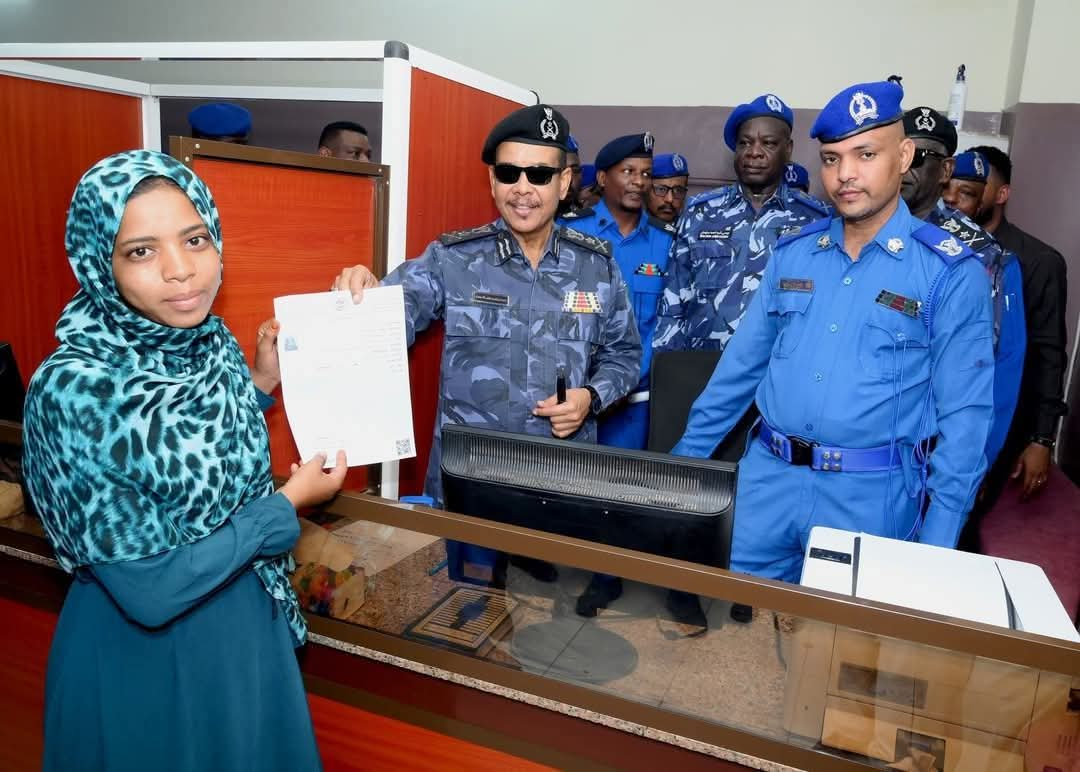
A significant step forward:Reviewing civil records and refining National Identification Numbers to safeguard national identity. Major General Iqbal Mansour: Data recovery has enabled the continuation of services and the resumption of registration. Lieutenant General Dr. Jalal Tawar: Hails the thwarting of militia plans. Sudan’s Civil Registry has fully recovered its database despite the damage inflicted on its a...

Contact Us

Address: Sudan News Agency (SUNA) Building, Jamhoria Street, Khartoum - Sudan
Mobile:+249 909220011 / +249 912307547