

Report of the Chairperson of the Commission on the African Union?United Nations Hybrid Operation in Darfur (UNAMID) and the situation in Darfur
21 January, 2011
I. INTRODUCTION
1. The present report is submitted as a follow?up to the communiqué adopted by
Council at its 237th meeting held in Kampala, on 21 July 2010, and subsequent reports of
Council on Darfur. The report covers the various aspects of UNAMID activities and the
situation in Darfur for the period 1 October 2010 to January 2011.
II. UNAMID DEPLOYMENT AND PATROLS
2. Efforts towards the full deployment of UNAMID have continued. As at January
2011, the number of UNAMID civilian staff stands at 4,298, representing 78% of the
approved strength of 5,516. The strength of UNAMID military personnel stands at 17,468
representing 89% of authorised strength of 19,555. The current strength of individual
police officers stands at 2,745, which is 73% of authorised strength of 3,772. Of the
authorised 19 Formed Police Units, 16 have deployed with a total strength of 2,234 or 89%
of the authorised strength of 2,660.
3. During the period under review, UNAMID military personnel conducted a total of
11,472 patrols. On its part, UNAMID police conducted a total of 18,158 patrols, and
maintained 24/7 patrolling in 18 camps. UNAMID has taken significant steps to increase its
effectiveness on the ground, including through a robust protection strategy and
determined posture in the face of restrictions to freedom of movement. In this connection,
instructions have been issued to UNAMID military and police units that attacks on UNAMID
patrols are to be responded to robustly and in accordance with the rules of engagement,
proactive measures are to be taken to protect civilians, and the Mission is to work
proactively towards opening routes to facilitate freedom of movement for civilians and
humanitarian actors. The initial effects of these changes were evident in the Mission’s
response to events in Shangil Tobay, Khor Abeche and Shaeria, where UNAMID military
secured civilians around team sites and effectively patrolled areas affected by fighting.
III. SECURITY SITUATION
4. Major developments in the security situation included an increase in clashes
between Sudanese Armed Forces (SAF) and armed movements, and a decrease in intercommunal
conflict. Targeted attacks on UNAMID and humanitarian personnel also
decreased. However, three kidnapping incidents occurred during the reporting period.
5. Following the mobilization of the Justice and Equality Movement (JEM) forces in
Darfur, in late October, and the substantial reinforcement of SAF in several locations, JEM
and SAF elements came into contact and clashed on several occasions in North and South
Darfur. In early November, JEM attacks on SAF units and several villages were reported in
South Darfur. Subsequent clashes between SAF and JEM were reported in various locations
in North and South Darfur and, on 8 and 9 November, JEM attacked village markets at Um
Gidan and Um Alkhairat in South Darfur. On 12, 24 and 25 November, SAF conducted aerial
attacks near the Kiir Adhan Bridge in the vicinity of the South Darfur?Southern Sudan
border, apparently against JEM elements suspected to be moving toward Southern Sudan.
6. On 10, 11 and 17 December, following the deterioration of relations between the
Government and Minni Minawi, clashes between SAF and Sudan Liberation Army (SLA)?
Minni Minawi forces took place in Khor Abeche. On 23 December, SLA?Minni Minawi, JEM
and, reportedly, several other SLA factions jointly attacked GoS police in Dar Al Salam, in
North Darfur. Further clashes were reported on 24 and 25 December, south of Shangil
Tobaya. On 26 December, SAF and SLA?Minni Minawi clashed near Shaeria, South Darfur.
7. During the reporting period, 14 deaths attributable to inter?communal conflict were
recorded. While still serious, this figure represents the lowest number of deaths
attributable to inter?communal conflict in Darfur over a 90?day period since the beginning
of UNAMID’s operations. The decrease is partially a result of higher levels of seasonal
rainfall; the renewed effort by the Government to broker reconciliation agreements; and
UNAMID military and police security and protection patrols. The total number of incidents
involving banditry, criminality or the harassment of local civilians by actors other than military or
formal militia units, decreased from 228 cases in the period 1 June to 30 September 2010, to 198 in
this reporting period.
8. UNAMID peacekeepers were attacked twice. On 6 October, UNAMID military was
fired upon by a group of unidentified armed men while conducting a patrol near Kutum in
North Darfur. In the second attack, unidentified gunmen shot a UNAMID peacekeeper
while he was guarding a water point near Kutum, on 5 November. Furthermore, and in a
continuation of a disturbing trend, three kidnapping incidents occurred during the
reporting period, on 7 October and 4 November 2010, and on 13 January 2011. The latest
incident involved three UN Humanitarian Air Services helicopter crew, who were abducted
after landing at Um Shalaya, West Darfur; they are still in captivity. Finally, a total of seven
attempted car?jackings of UNAMID or UN agency vehicles occurred during the reporting
period. Most of these incidents involved armed incursions into offices or guesthouses by
assailants in search of money and valuables. The relatively low number of car?jacking
incidents suggests that recently introduced mitigation measures, which include improved
information?sharing and coordination with Government security services, the increased
use of UNAMID armed escorts and enforcing curfews, are proving effective.
9. UNAMID continues to reduce the threat posed by unexploded ordnance
contamination throughout Darfur. During the reporting period, a total of 133 unexploded
ordnance devices were destroyed and unexploded ordnance risk education was delivered
to 50 teachers. A further 12,092 civilians received lectures on the risk unexploded
ordnance poses and the proper methods for dealing with such risks. The Mission
responded to several reports from local communities of unexploded ordnance threats by
conducting emergency assessments of 41,986m² of land. UNAMID also surveyed 1,154
kilometres of road for possible contamination from unexploded ordnance.
10. On 4 October, the North Sudan Disarmament, Demobilization and Reintegration
Commission commenced the Reintegration Opportunities Programme in al Fashir. A total
of 189 discharged members of Declaration of Commitment signatory movements received
small business and skills acquisition training as part of the program.
PSC/PR/COMM.2(CCLVIII)
11. UNAMID’s freedom of movement was restricted on 45 occasions. Of these, 37
restrictions were imposed by Government of Sudan authorities, 3 by SLA?MM and 5 by
communities. Of the 37 restrictions imposed by the Government, in approximately 75
percent of cases, movement was restricted during and as a result of military engagements
between SAF and armed movements. UNAMID has taken a number of measures to
increase the robustness of its operations and address restrictions of movement.
12. Following a meeting between UNAMID, Government of Sudan (GoS) and the U.S.
Government, chaired by the AU High Level Implementation Panel (AUHIP), on the subject
of security, UNAMID has supported selected elements of the GoS security plan for Darfur,
where those are in accordance with its mandate and its requirement for respecting human
rights.
IV. PROTECTION OF CIVILIANS
13. UNAMID has updated its strategy for the protection of civilians, in coordination
with the UN Country Team (UNCT). The updated strategy provides comprehensive
strategic, managerial and operational guidance for the implementation of the Mission’s
protection mandate. Taking into account the Mission mandate and an analysis of the
protection environment in Darfur, the strategy outlines four main objectives, these being:
(i) fulfillment by the Government, armed groups and other non?state actors of their
responsibilities to protect civilians in accordance with international human rights and
humanitarian law; (ii) protection of civilians from physical acts of violence; (iii) freedom of
access to populations at risk; and (iv) prevention of violations of human rights, and ensure
effective response, particularly in regard to women and children.
14. The number of people displaced by the clashes between SAF and SLA?Minni Minawi
is estimated at 14,000, in Shangil Tobaya, 15,000 in Dar Al Salam, and 10,000, in Khor
Abeche. UNAMID has maintained a robust presence and an active patrolling program in
and around these and other affected areas to deter fighting and maintain situational
awareness. The Mission continues to assist the humanitarian community to reach people
in need and to provide protection, water and emergency medical assistance for civilians
sheltering around UNAMID team sites in Shangil Tobaya, Khor Abeche and Shaeria.
15. During the reporting period, a number of inter?communal reconciliation
agreements were reached, reducing tensions in many areas of Darfur. On 10 October,
traditional leaders from the two largest tribes in South Darfur, the Southern Rizeigat and
the Fur, signed a Charter for Peaceful Co?existence. On 22 November, the Habaniya and
Fellata tribes in Southern Darfur, which have been sporadically engaged in hostilities since
the early 1990s, signed a peaceful co?existence agreement.
16. UNAMID, in partnership with UNHCR and the El Fasher University, developed and
delivered a course on conflict management to 75 ajaweed (mediation) committee and civil
society organization members to enhance their capacity to address conflict at the local
level. In addition, with a view to supporting verified voluntary returnees in the Korma area
in North Darfur, UNAMID, UNHCR and UNDP delivered training on dialogue, negotiation
and mediation to 25 ajaweed committee members and other local actors.
17. The human rights situation in Darfur remained a cause for concern. UNAMID held a
four?day workshop on human rights and community policing for 25 Government police and
delivered training to 60 Government prison staff. UNAMID human rights officers delivered
training to 200 military, 22 police and 67 civilian personnel in the Mission. On 25
November, UNAMID, agencies and the three State Governments launched a “16 Days of
Activism against Gender Violence” program. In addition, several advocacy and capacitybuilding
activities were undertaken as part of the campaign. In addition, UNAMID Police
conducted several workshops on human rights and policing, and trained 561 communitypolicing
volunteers on the basics of community policing. In an effort to strengthen the rule
of law, particularly in rural areas, UNAMID, UNDP and the West Darfur judiciary held a
workshop on Sudanese criminal law, criminal procedure and laws of evidence for 40 rural
court judges.
18. UNAMID continued to mainstream child protection concerns, monitor and report
violations of children’s rights and to advocate at the community level for the protection of
children. The Mission also engaged in dialogue with SAF and armed groups to gain
commitments to Action Plans to end the recruitment and use of child soldiers.
V. HUMANITARIAN ASSISTANCE AND EARLY SOCIO?ECONOMIC RECOVERY
19. Prior to the clashes between SAF and SLA?MM, the humanitarian situation had
remained relatively stable. Humanitarian efforts nevertheless remain impeded by
insecurity and access restrictions. Overall, access was consistently limited in eastern Jebel
Marra, intermittently limited in areas where there was fighting between SAF and armed
movements, and limited by the need for armed escorts and remote programming in most
other areas outside main urban centers due to the risk of banditry. Concerted efforts to
address humanitarian access restrictions in Darfur are underway.
20. Access to eastern Jebel Marra has been heavily restricted since February 2010.
General food distribution in the area was last conducted in November 2009 to 87,286
persons. Several agencies accessed part of the area between 13 and 15 October and
identified pressing humanitarian needs, particularly in relation to health, water, sanitation
and hygiene. Clearly, insecurity and risks associated with banditry continue to present
challenges to humanitarian operations. In spite of these difficulties, food aid was
successfully distributed to 90 per cent of the targeted population in October. This high
figure is due in part to the good harvest experienced in 2010, which meant most
beneficiaries of food assistance were IDPs residing in camps rather than communities in
remote locations.
21. The Government announced it has decided to relocate IDPs from Kalma camp to
new settlements located nearby. Following this decision, the Humanitarian Country Team
endorsed “The Application of Guiding Principles in the Context of the Relocation of IDPs in
Darfur”. Government authorities have assured the humanitarian community that
relocations will be voluntary and access will be granted to resettlement sites so IDPs may
determine their appropriateness. In this context, activities were conducted in support of
the voluntary return of 496 IDPs from Kalma camp and Nyala to five villages in West
Darfur.
22. The total number of quick?impact projects approved for implementation between
2007 and 2010 now stands at 482. Of these, a total of 100 projects in such sectors as
education, health, water, sanitation, income generation, and shelter have been completed
to date.
VI. PEACE PROCESS
23. Limited progress has been achieved in the Doha peace negotiations. While the Joint
Chief Mediator (JCM) originally planned to present to the Government and the Liberation
and Justice Movement (LJM) a draft agreement in early September 2010, the parties
requested additional time to negotiate outstanding issues. In the first week of November,
the five joint negotiating committees concluded their work. Thereafter, the JCM worked
directly with the parties to reconcile outstanding differences. The main points of
disagreement remain the powers of a regional authority to implement the peace
agreement in Darfur, as well as issues related to security arrangements, power?sharing,
and compensation.
24. On 5 November, the JCM presented to the AU?UN high?level review meeting in
Addis Ababa, a schedule for the completion of the peace process by 19 December. At that
meeting, the AU and UN, including the Joint Special Representative (JSR) and the JCM,
agreed to a sequenced programme of concluding the Doha talks on that date whereupon
the Doha outcome document, whether in the form of a signed agreement or a mediation
text, would be transferred to the Darfur Political Process (DPP) to initiate the next stage of
the process leading to the Darfur?Darfur Conference (DDC), at which an inclusive and
holistic global political agreement should be reached, in accordance with the AU policy.
25. On 6 November, the Sudan Consultative Forum (SCF) convened in Addis Ababa. On
that occasion, the UN, AU and other partners agreed to proceed with the DPP leading to
the DDC. In accordance with the timeline provided by the Joint Mediation, which foresaw
the conclusion of negotiations in December 2010 the SCF agreed that the DPP would
commence immediately thereafter. It was agreed that the DPP would be based on the
outcomes of the Doha talks and would be led by the AUHIP and UNAMID, in partnership
with the State of Qatar, with the support of other interested stakeholders.
26. From 28 November to 2 December 2010, the JCM and Minister of State for Foreign
Affairs of Qatar, His Excellency Ahmed bin Abdullah Al?Mahmoud, visited Darfur to
promote the provisional outcomes of the Doha negotiations and discuss outstanding issues
with stakeholders. Most of the meetings proceeded without incident. It should be noted
that, in the meeting in Zalingei, a physical confrontation between pro? and anti?Doha
groups resulted in the death of two civilians after Government police used force to
disperse the crowd.
27. The JCM continues to encourage the major armed movements, including the Justice
and Equality Movement (JEM) and the Sudan Liberation Movement?SLM/Abdul Wahid, to
take part in the peace process. On 16 December, a JEM delegation agreed to resume
negotiations with the Government on a ceasefire agreement. Thus far, the two sides
remain far apart on basic demands. The Government delegation left Doha on 31 December
2010, in accordance with its stated position and the mediation timeline. However, the GoS
continues to engage with the Mediation in the negotiations, dispatching small negotiating
teams to Doha in order to facilitate the rapid conclusion of the agreement with LJM. Prior
to its departure from Doha, the Mediation presented the GoS with a proposed mediation
text covering the outstanding issues. The GoS rejected the draft. The Mediation is currently
considering how the draft may be enhanced.
28. At a meeting in Khartoum on 15 January 2011, chaired by the AUHIP, the Panel,
UNAMID, GoS and the U.S. Government agreed to the rapid launch of the DPP. The process
is to be complementary to and concurrent with the final stage of the Doha peace talks.
Noting that the Doha outcome document is not yet availed to the DPP, the meeting
insisted that the DPP should not be subject to further delay. The modalities of the DPP
were agreed in outline, including emphasizing that it is to be an independent process
convened jointly by the AUHIP and UNAMID. Before the end of January, UNAMID will
establish a DPP Unit, reporting to the JSR, including all relevant Departments in the
Mission.
29. In the meantime, on 17 January, the AUHIP met the Emir of the State of Qatar. At
this meeting, the Emir confirmed his intention to conclude the negotiations in Doha in the
coming days and to partner with the AUHIP and UNAMID in implementing the next stages
of the process.
30. The credibility of the DPP and its role in assisting the people of Darfur to engage to
reach a definitive political solution to the conflict will depend on the steps the Government
must take to create an enabling environment. These include, inter alia, protection of the
civil and political rights of participants such that they can express their views without fear
of retribution; freedom of speech and assembly to permit open consultations; freedom of
movement for participants and UNAMID; and proportional and equitable participation
among Darfuri interests. I note with satisfaction the commitment of the Government of the
Sudan to do all it can to create conducive conditions for the successful conduct of the DPP.
A joint UNAMID?Government of Sudan technical task force has been established to
monitor the conditions for an enabling environment and to develop modalities for
implementing the DPP.
31. Relations between the Government and SLA?Minni Minawi deteriorated markedly
during the reporting period after SLA?Minni Minawi forces failed to appear for integration
into the SAF in accordance with an agreement reached on 30 October. On 21 November,
Minni Minawi issued a communiqué stating that he refused to disarm his forces on the
grounds that the Government had attempted the disarmament in a manner inconsistent
with the provisions of the DPA. On 3 December 2010, a SAF military spokesperson issued a
statement declaring Minni Minawi an enemy of the Government. President Bashir issued a
decree on 8 December declaring that the Wali of West Darfur had replaced Minni Minawi
as the new Chairperson of the Transitional Darfur Regional Authority (TDRA), and Security
agents arrested 20 SLA?Minni Minawi political personnel at TDRA offices in El Fasher and
Nyala.
VII. OBSERVATIONS
32. While I note with satisfaction the decrease in inter?communal fighting, I am deeply
concerned over the deterioration of the security situation caused by the upsurge in fighting
between Government and movement forces. I am encouraged that the fighting has
recently subsided. However, the potential for further fighting will remain for as long as
there is no agreement between the parties to cease hostilities and pursue negotiated
peace. I, therefore, call on the Government and the movements to reach an immediate
ceasefire and enter into negotiations over an inclusive and comprehensive peace
agreement in good faith and without delay.
33. I would like to reaffirm that a resolution of the conflict in Darfur must be the
outcome of an inclusive negotiating process, involving both belligerent and non?belligerent
parties and constituencies, on a comprehensive agenda. Among the arguments for this
approach is the observation that, negotiating solely with armed rebels, provides an
incentive for disaffected groups or individuals to abandon civic political engagement in
favour of armed rebellion, and gives an opportunity for armed rebels, irrespective of the
extent of their popular support, to hold the peace process hostage to their narrow
agendas. To date, efforts to involve Darfurian civil society in the peace talks have been
purely consultative, selective and ad hoc. This has had the unfortunate result of becoming
a polarizing issue within Darfur itself. And by limiting the talks to the armed groups, this
process has empowered the armed movements to act as spoilers if they so wish.
34. I reiterate my full support to the efforts of the AUHIP and UNAMID to convene the
DPP and my confidence in their ability to conduct it successfully. I commend Presidents
Thabo Mbeki, Abdusalami Abubakar and Pierre Buyoya for their tireless efforts and
outstanding commitment to the promotion of sustainable peace, justice and reconciliation
in the Sudan.
35. I am extremely happy with the high level of partnership between the AUHIP and
UNAMID on all aspects of our efforts to address the challenge of peace in Darfur. I am
particularly keen to see the Darfur Political Process, leading to the Darfur?Darfur
Conference, move into its active phase during the month of February. I am confident that
this will allow the recommendations of the AU Panel on Darfur, adopted by Council as AU
policy in October 2009, to be realized. I commend the JCM and the State of Qatar for their
efforts in seeking to conclude a peace agreement in Doha in accordance with the agreed
schedule, and urge them to cooperate fully with the forthcoming DPP?DDC, which will
mark the culmination of their efforts.
36. In closing, I would like to thank the Joint Special Representative, Professor Ibrahim
Gambari, for his sustained efforts and outstanding commitment to the achievement of
peace in Darfur, as well as for the cooperation and support extended to the AUHIP. I thank
the Force Commander and all of the women and men of UNAMID, who continue to work
tirelessly under difficult conditions.
Photo of the Week

Khartoum (Sudanaow Magazine) - In the heart of the capital Khartoum, specifically in the upscale Al-Taif neighbourhood, a young Sudanese man succeeded in turning his childhood dream and hobby of raising birds into a unique environmental and tourism project in Sudan and the region. It is the Marshal Nature Reserve, which had become a destination for visitors, embassies, and intern...
More-
16 November, 2026
Tales of Return Civil Registry Recovers Its Entire Database Despite War Destruction
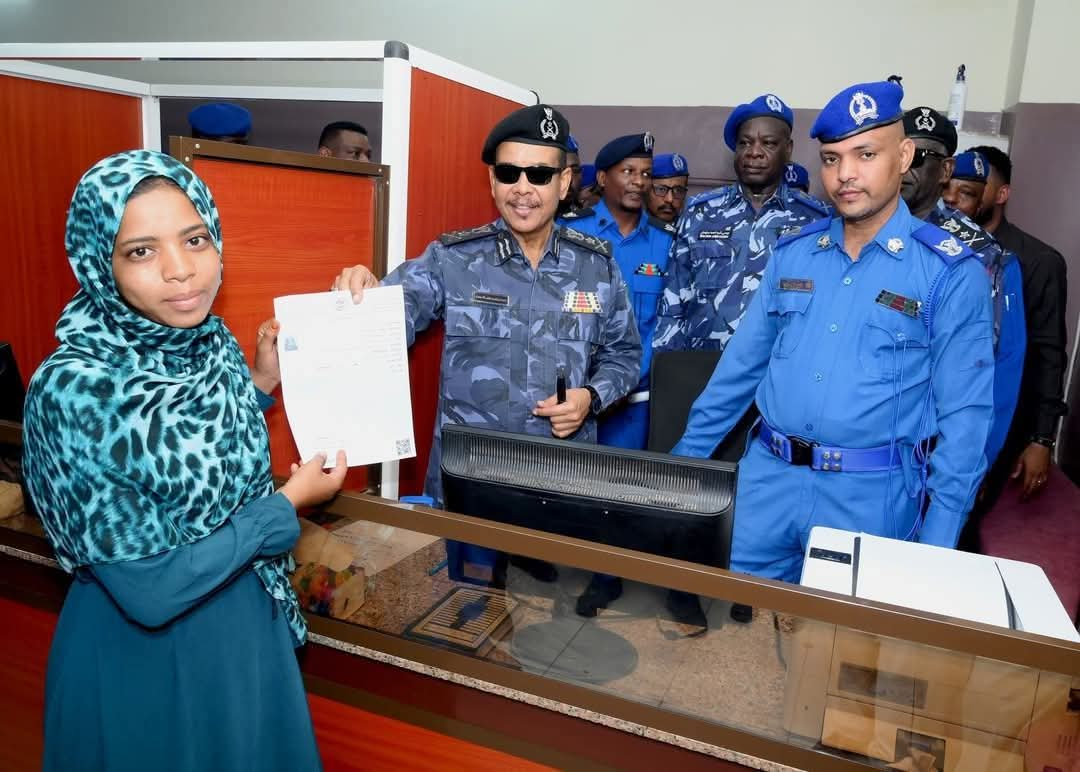
A significant step forward:Reviewing civil records and refining National Identification Numbers to safeguard national identity. Major General Iqbal Mansour: Data recovery has enabled the continuation of services and the resumption of registration. Lieutenant General Dr. Jalal Tawar: Hails the thwarting of militia plans. Sudan’s Civil Registry has fully recovered its database despite the damage inflicted on its a...

Contact Us

Address: Sudan News Agency (SUNA) Building, Jamhoria Street, Khartoum - Sudan
Mobile:+249 909220011 / +249 912307547